Spatial Technologist & Scenographer · MAS ETH DFAB Alumnus
Headsets isolate people. Architecture brings them together.
The technology industry spent billions attempting to convince the public to strap goggles across their faces inside living rooms and offices. Yet the most powerful spatial computing experiences happen when people walk into a shared room and watch the architecture respond to their collective presence.
No logins. No downloads. No visual barriers separating friends or colleagues.
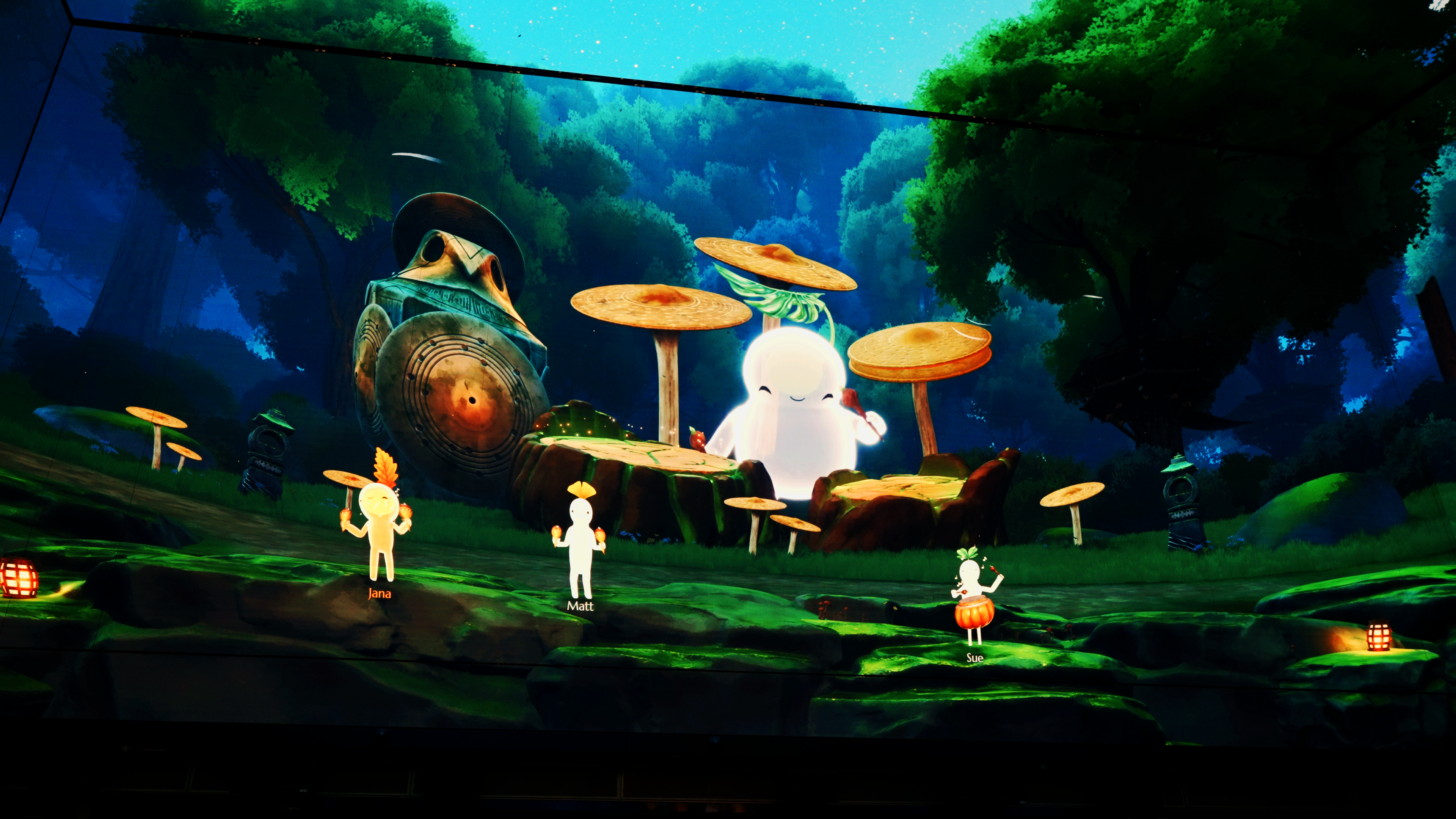
At Outernet London, we built Enchanted Forest: Melody of the Spirits across four-story 360-degree 16K LED canvases.
The technical challenge was scale. Hundreds of commuters and tourists pass through the Now Building every hour. If your interaction requires an app download or complex onboarding, 95% of people keep walking.
We designed a lightweight local mobile handshake. Visitors scanned a quick optical tag to trigger generative spirit avatars directly into the Unreal Engine and Ventuz real-time scene graph. As they moved their thumbs across simple responsive web sliders, procedural stems altered the L-Acoustics 5.1 surround spatial audio mix in real time.
When thirty strangers realize their hand movements harmonize into one spatial symphony, the room shifts from a transit lobby into a collective civic stage.
"Headsets isolate people. Architecture brings them together."
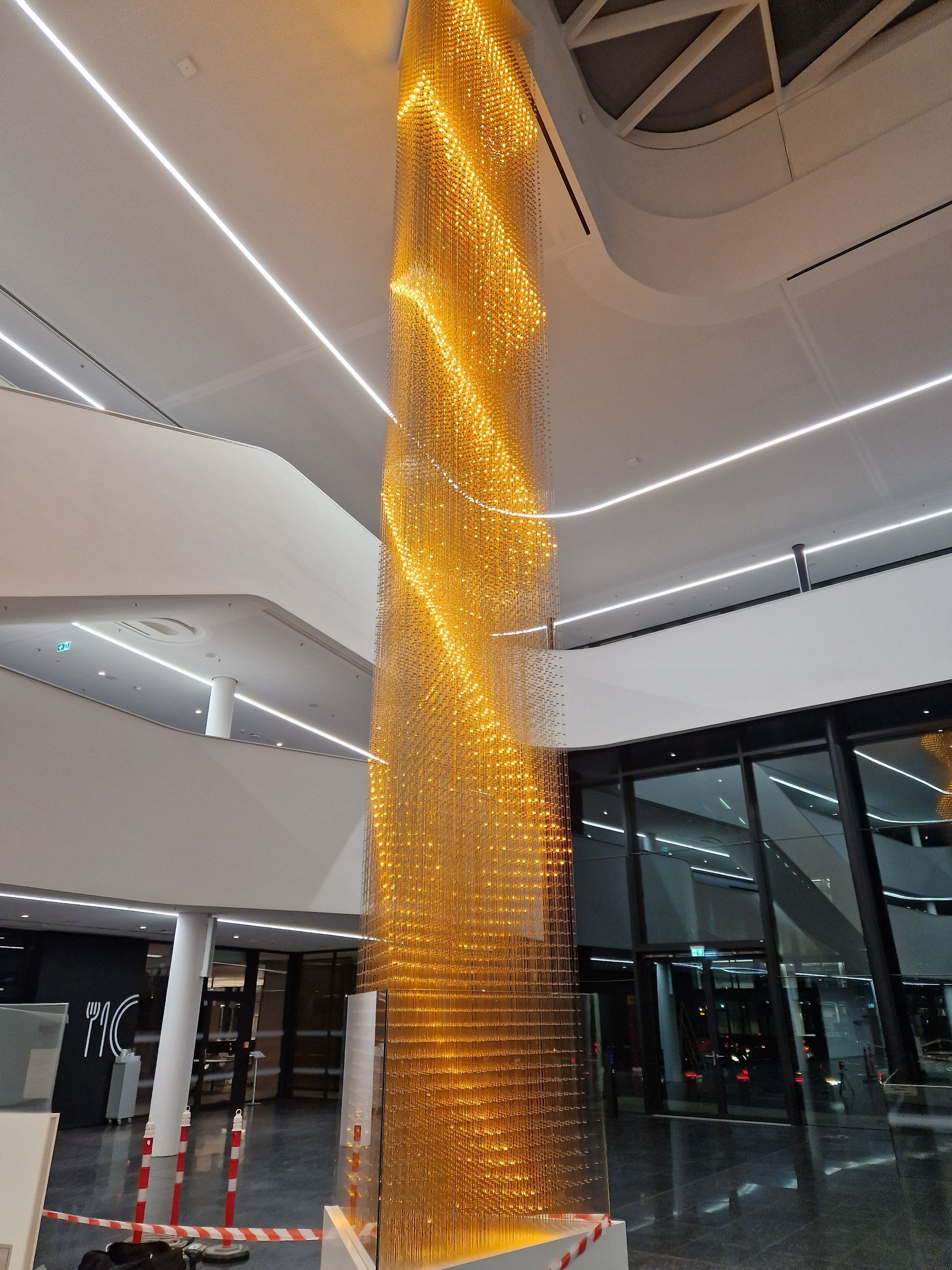
Procedural visual simulation and fluid movement inside Continental HQ STREAM Hannover
Physical kinetics meet volumetric graphics
Screens are only one surface of a room. True spatial media integrates structural kinetics.
Inside the Continental AG headquarters in Hannover, we built the STREAM installation. It hangs directly inside the central atrium: a 10-meter kinetic LED sculpture that undulates through space.
We did not feed it pre-rendered video loops. Pre-rendered video turns architectural installations into expensive corporate wallpaper. Instead, custom Unity particle systems simulate real-time aerodynamic fluid dynamics. Motor controllers and addressable LED clusters pulse in synchronization with real-time building telemetry and mobility metrics.
The structure breathes with the building itself.
Spatial cocoons and responsive interiors
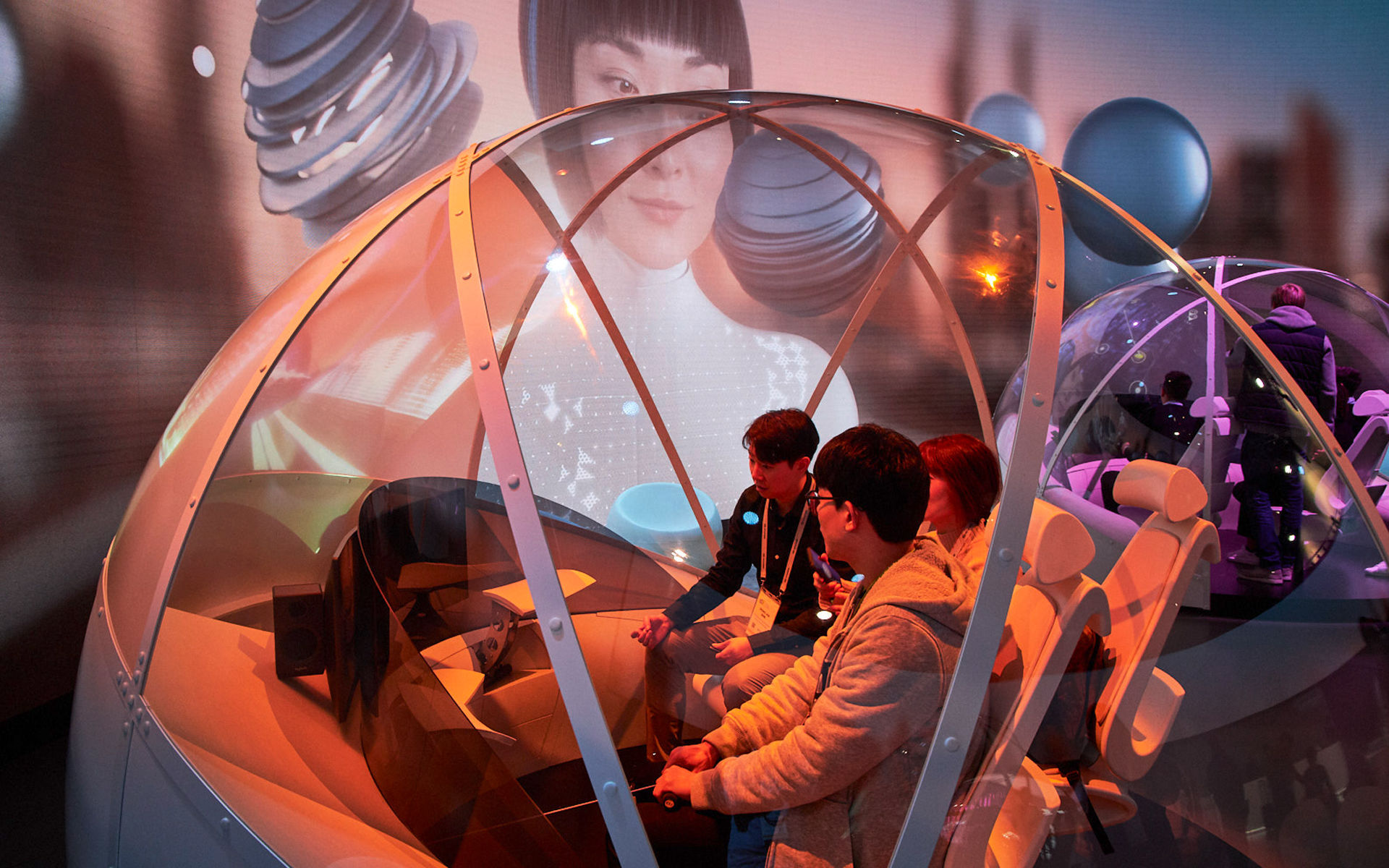
At CES in Las Vegas, working with Atelier Brückner on the Hyundai Style Set Free pavilion, we pushed responsive interiors into physical automotive shells.
Visitors sat inside personalized spatial pods. Projection-mapped surfaces and embedded haptic sensors calibrated interior mood palettes, sound zones, and ergonomic contours to the occupant's personal rhythm.
Interactive spatial cocoon and projection-mapped surfaces at Hyundai CES Las Vegas
Engineering rules for room-scale computing
If you build spatial computing rooms for public spaces, three engineering principles determine survival:
Sub-30ms sensory latency: If a visitor waves their hand or steps forward, the visual and acoustic feedback must arrive within 30 milliseconds. Anything slower feels broken.
Invisible sensory hardware: Keep tracking non-intrusive. Hide radar modules and LiDAR scanners behind sound-permeable fabric or frosted acrylic diffusers.
Decoupled render nodes: Separate sensory tracking processing from display output clusters. If one screen node reboots, the sensory brain continues streaming without dropping the room.
Architecture is the original spatial computing medium. When you treat walls, ceilings, and light as responsive computation surfaces, physical space becomes unforgettable.
Frequently Asked Questions
How do you track people in an interactive room without cameras or privacy concerns?↓
Millimeter-wave radar sensors (60 GHz to 77 GHz) track human centroids, distance, and velocity as anonymous point clouds. Radar operates reliably in pitch dark or bright daylight without storing any personally identifiable imagery.
What software stack powers multi-user interactive spaces?↓
Unreal Engine 5 and Ventuz for generative 3D visuals, TouchDesigner for signal routing, and custom ESP32 firmware running Open Sound Control (OSC) to link physical motor hardware and DMX lighting.
Can real-time spatial installations handle hundreds of concurrent participants?↓
Yes. At Outernet London, local WiFi network stems allowed hundreds of visitors to connect mobile devices simultaneously, driving procedural avatars across four-story 16K LED canvases with sub-frame synchronization.