Robotic 3D-Printing for Composite Facades
ETH Zurich MAS DFAB Research • Zurich, Switzerland
@Digital Building Technologies, ETH Zurich
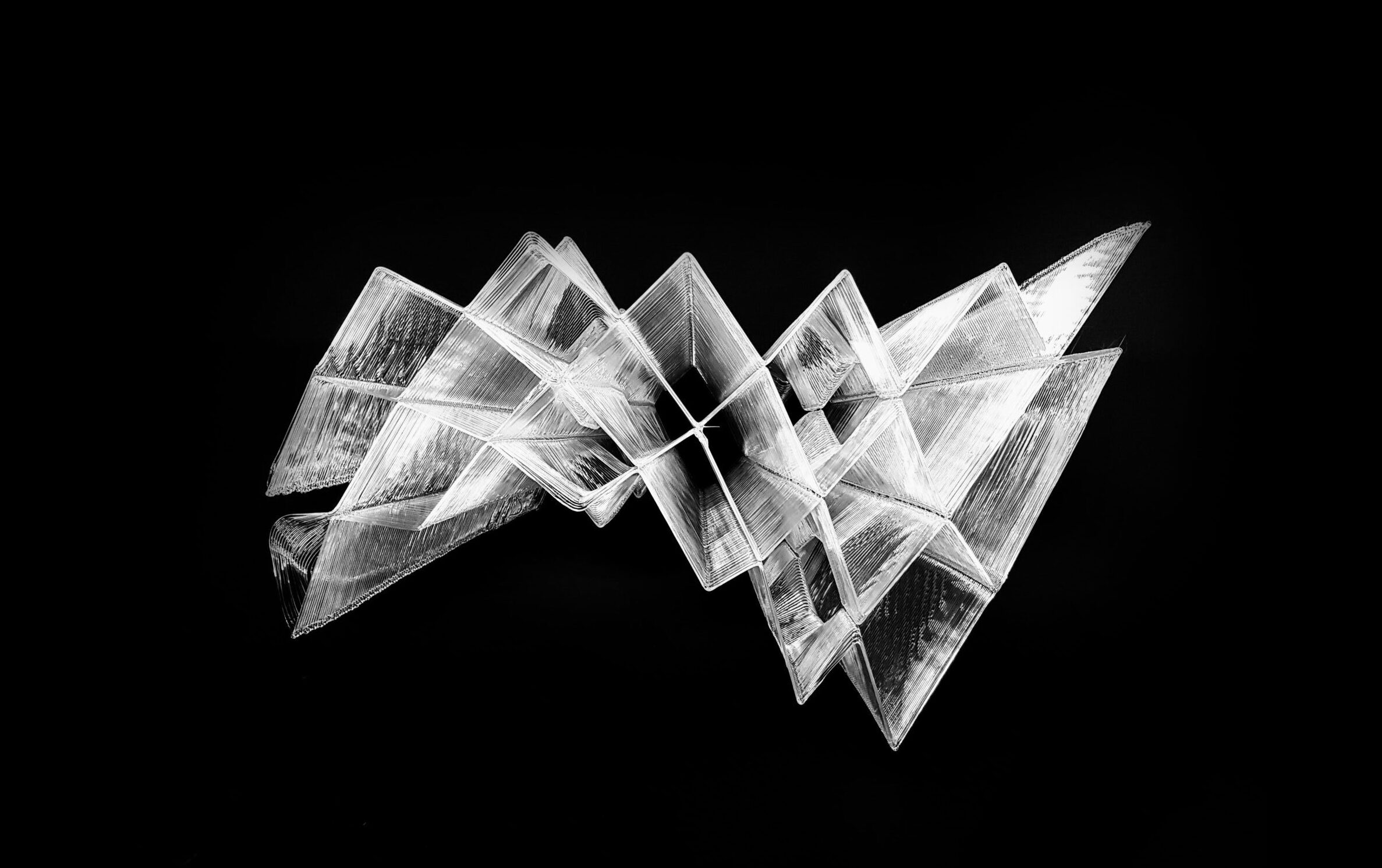
Developed at the Chair of Digital Building Technologies (DBT), ETH Zurich by Guillaume Jami and Priyank Soni, this research investigates a novel robotic 3D-printing paradigm for high-performance architectural building envelopes.
Traditional building envelopes rely on layered, multi-trade assemblies (sheathing, vapor barriers, insulation batts, cladding panels, and acoustic baffles). This project redefines the concept of a "Composite Façade" by robotically extruding translucent PETG polymers into functionally graded cellular structures that simultaneously fulfill thermal, acoustic, structural, and daylighting functions.
Using a 6-axis Universal Robots UR5 manipulator equipped with a custom-engineered high-flow 3D printing end-effector, the system coordinates non-standard toolpaths generated through Compas Slicer and multi-agent boid simulation plugins in Grasshopper. The resulting patented 1:5 demonstrator prototype integrates concrete-reinforced vertical channels, post-tensioned tie rods, and cellular micro-geometries tailored to environmental context.
Concept & Multi-Functional Composite Facade Architecture
The facade system eliminates fragmented construction layers by unifying six distinct building envelope functions into a single robotic print: structural capacity, natural ventilation, acoustic dampening, selective solar shading, thermal insulation, and aesthetic depth.
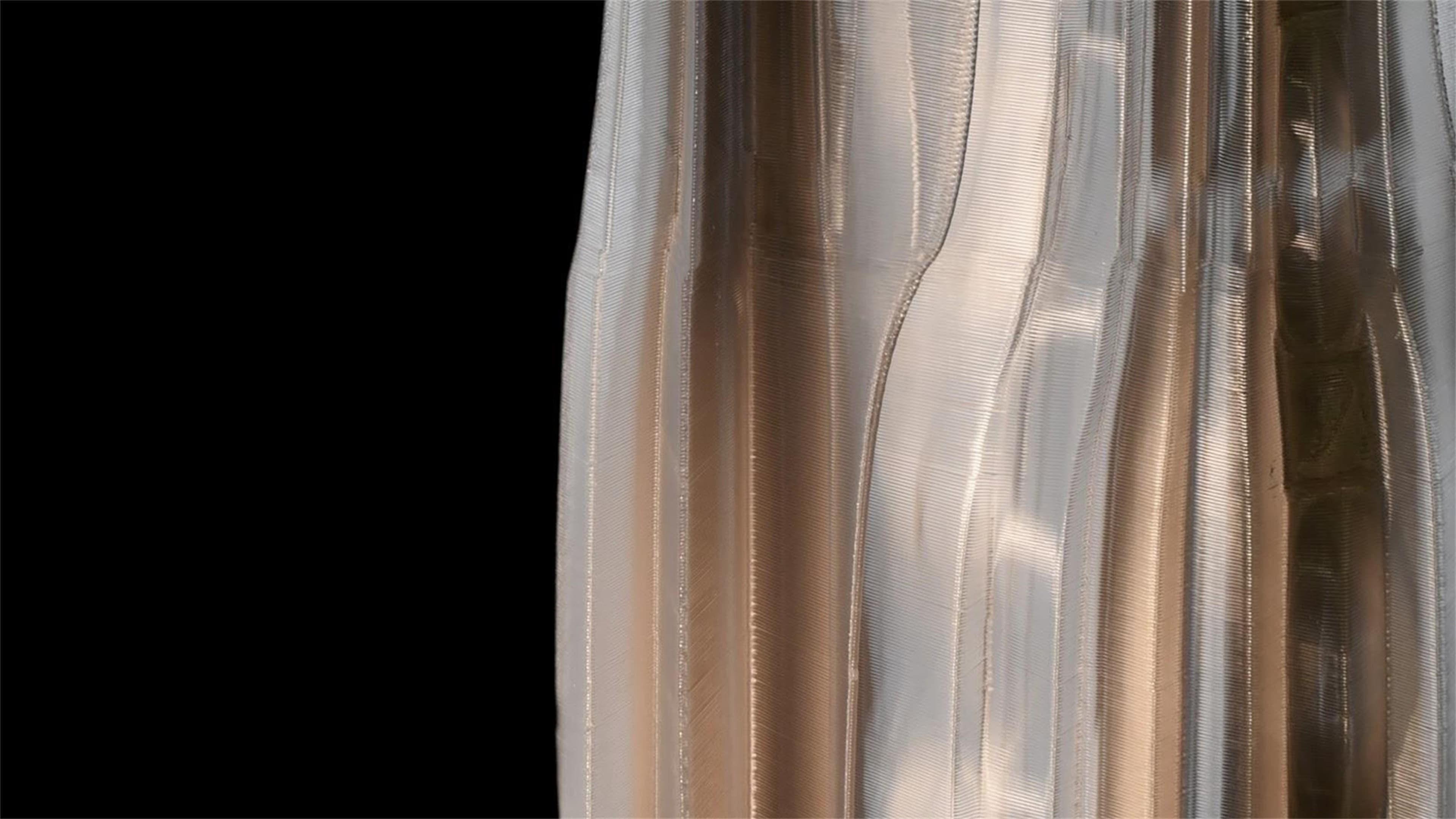
Translucent PETG facade demonstrator combining structural cavities with acoustic cells
Pattern Research & Cellular Morphology
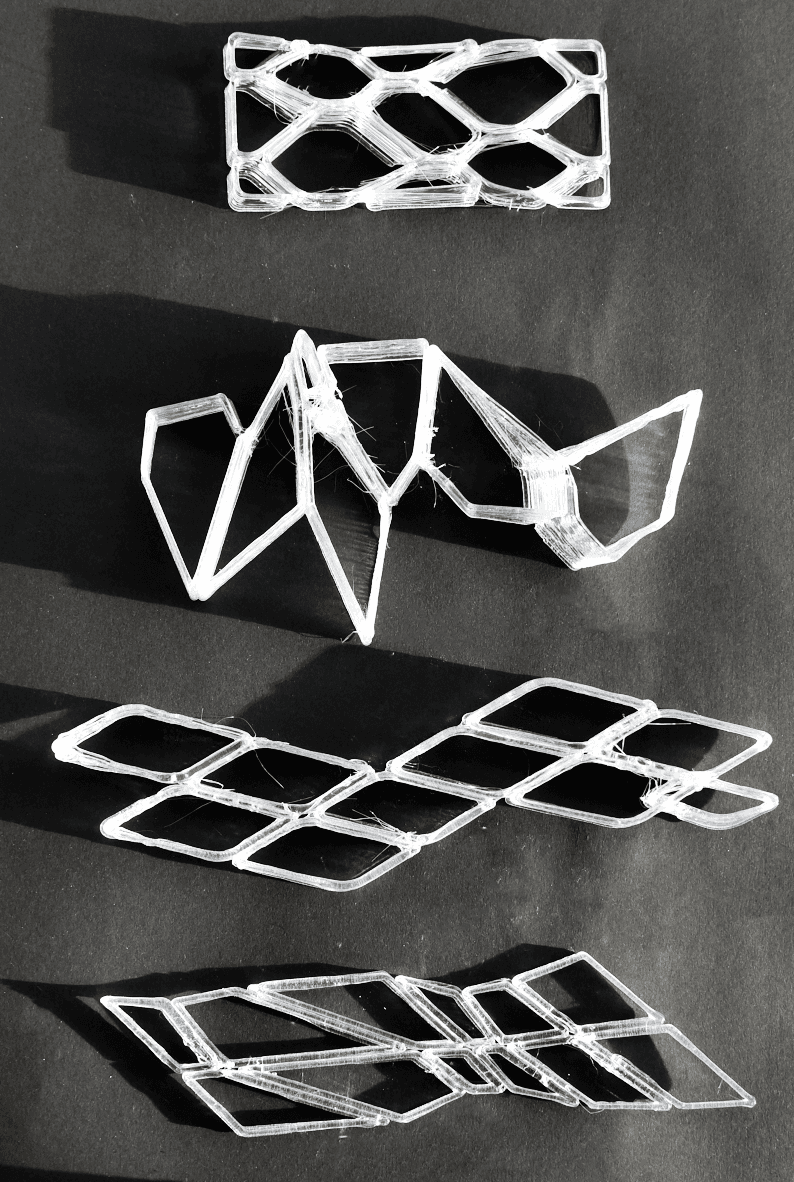
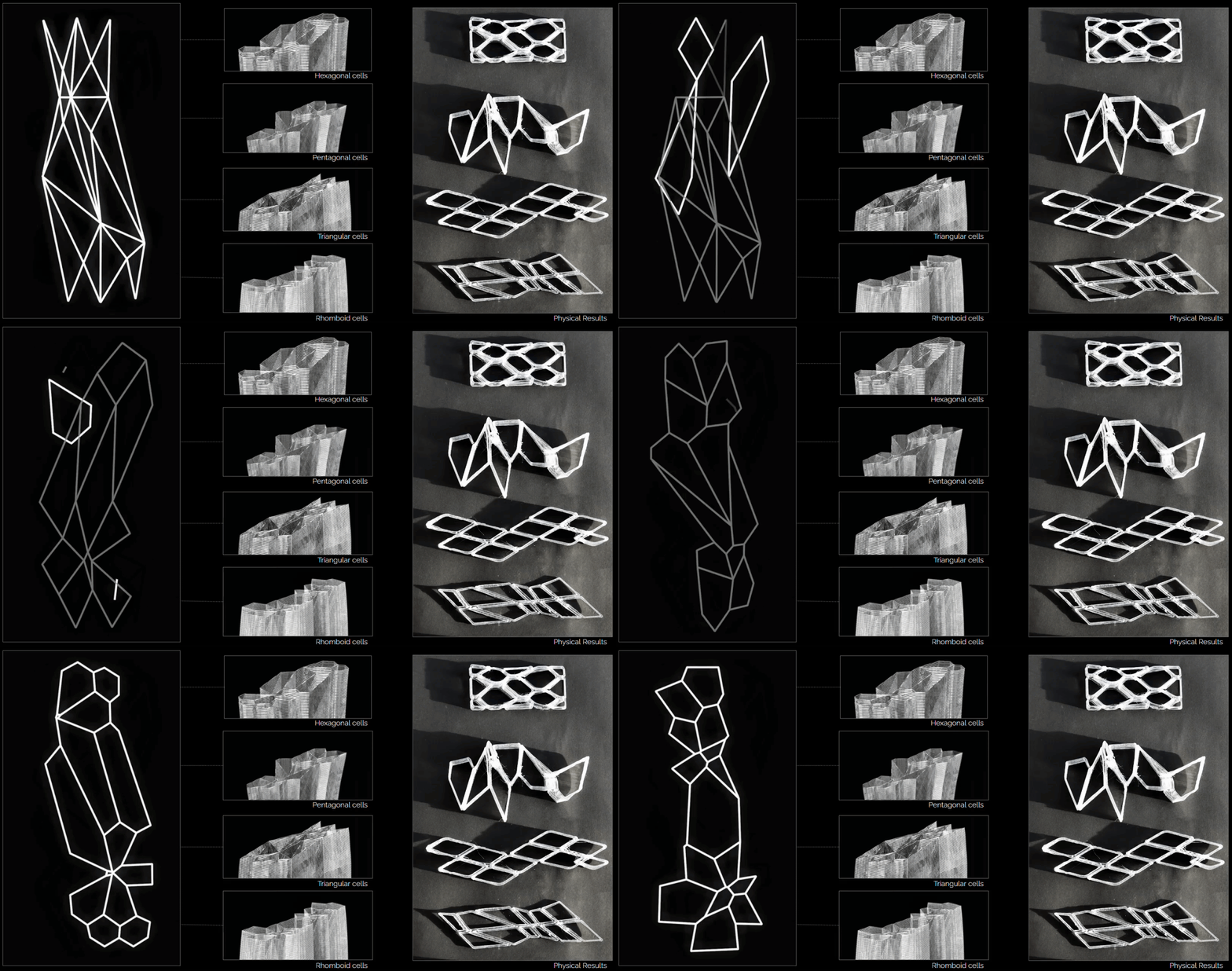
Extensive morphological studies evaluated five cellular tessellations: pentagonal, hexagonal, triangular, rhomboid, and quad cells. Physical test coupons and computational structural analysis determined optimal stress distribution and daylight transmission coefficients across variable wall depths.
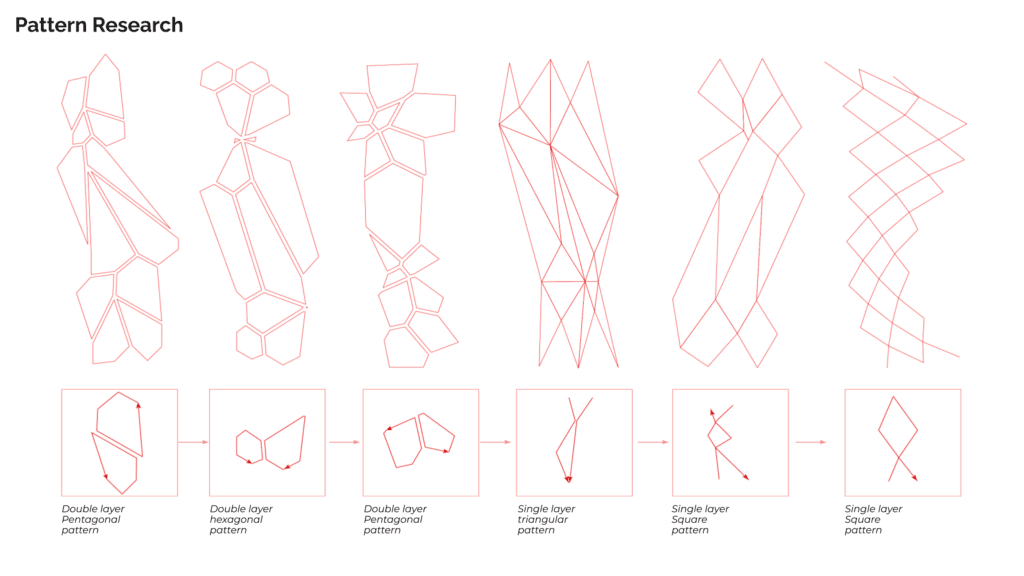
Pattern research comparing pentagonal, hexagonal, triangular, and rhomboid cellular units
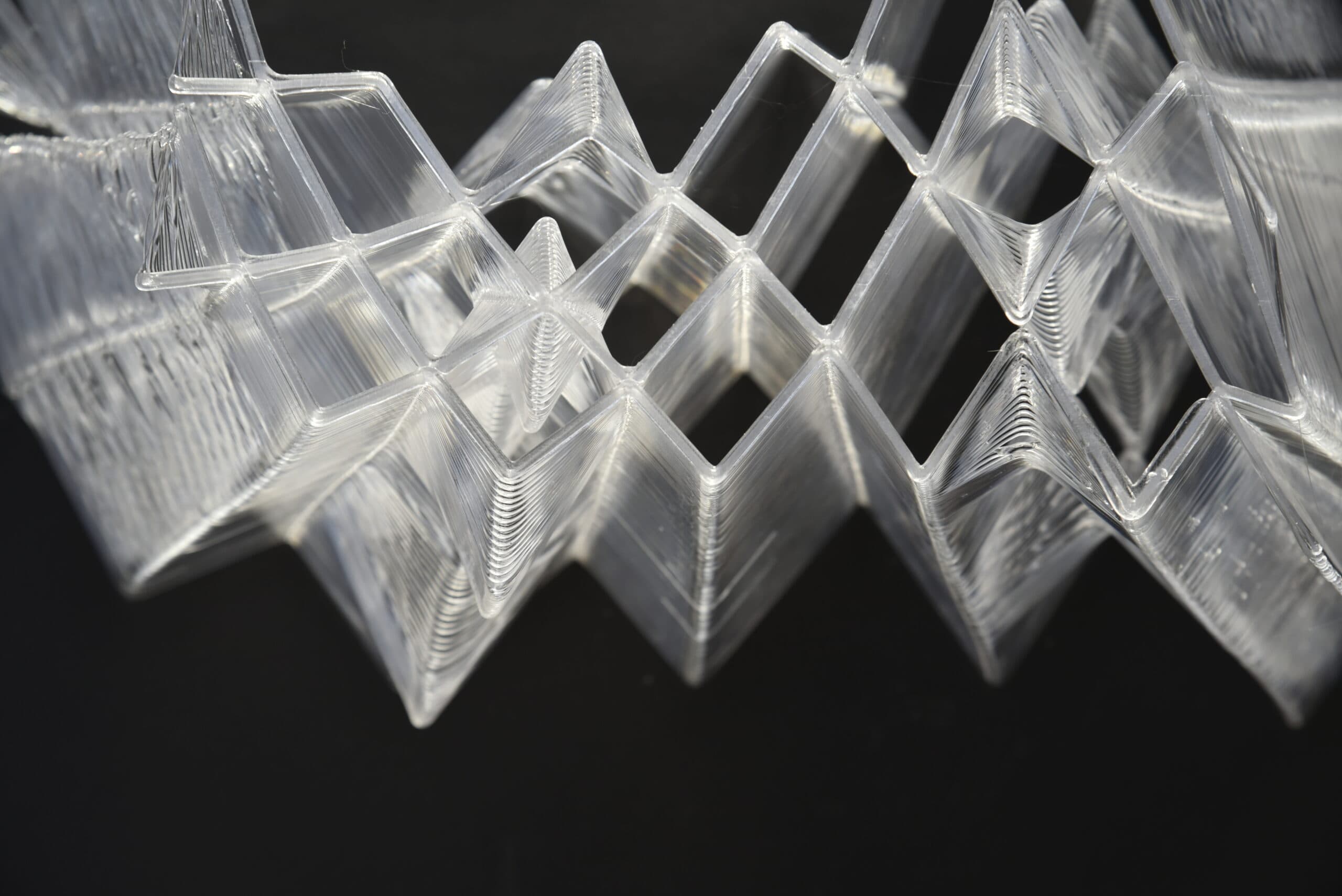
Physical printed test specimens evaluating geometric stiffness and light diffusion
Cell Cross-Section & Functional Gradation
Parametric cross-section variations detailing structural rib offsets, acoustic absorption chambers, and thermal performance parameters.
Cellular cross-section variations for acoustic and thermal performance
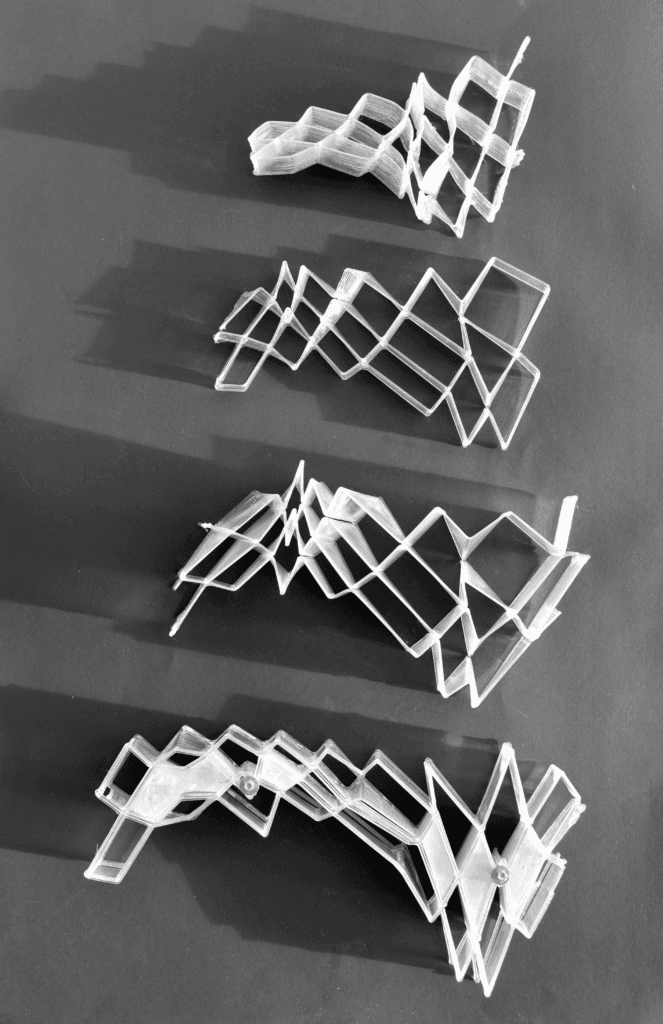
Parametric cell dimensioning and structural rib offsets
Continuous Layer 3D Printing Progression
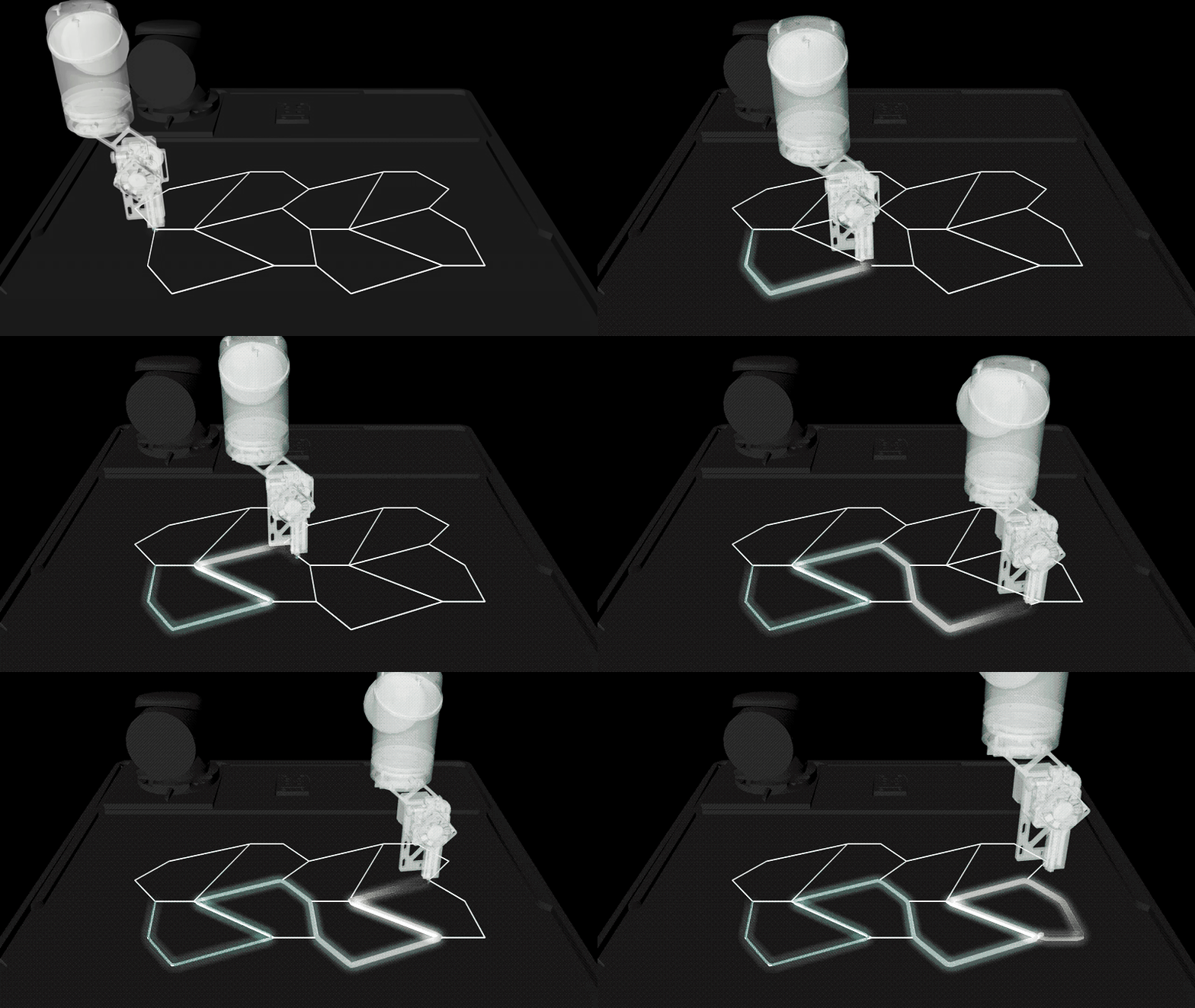
Continuous non-retraction toolpath execution across contour layers, illustrating real-time additive manufacturing dynamics on the 6-axis UR5 manipulator.
Animated 3D printing progression across continuous contour layers
Toolpath Simulation & Dynamic Overlap Detection
Robotic trajectory planning scripts were developed to calculate continuous extrusion paths without retraction. Algorithmic overlap feedback loops detected potential nozzle collisions and over-extrusion seams in acute-angle rhomboidal cells, ensuring consistent material deposition.
Toolpath feasibility simulation detecting bead overlap across complex corner nodes
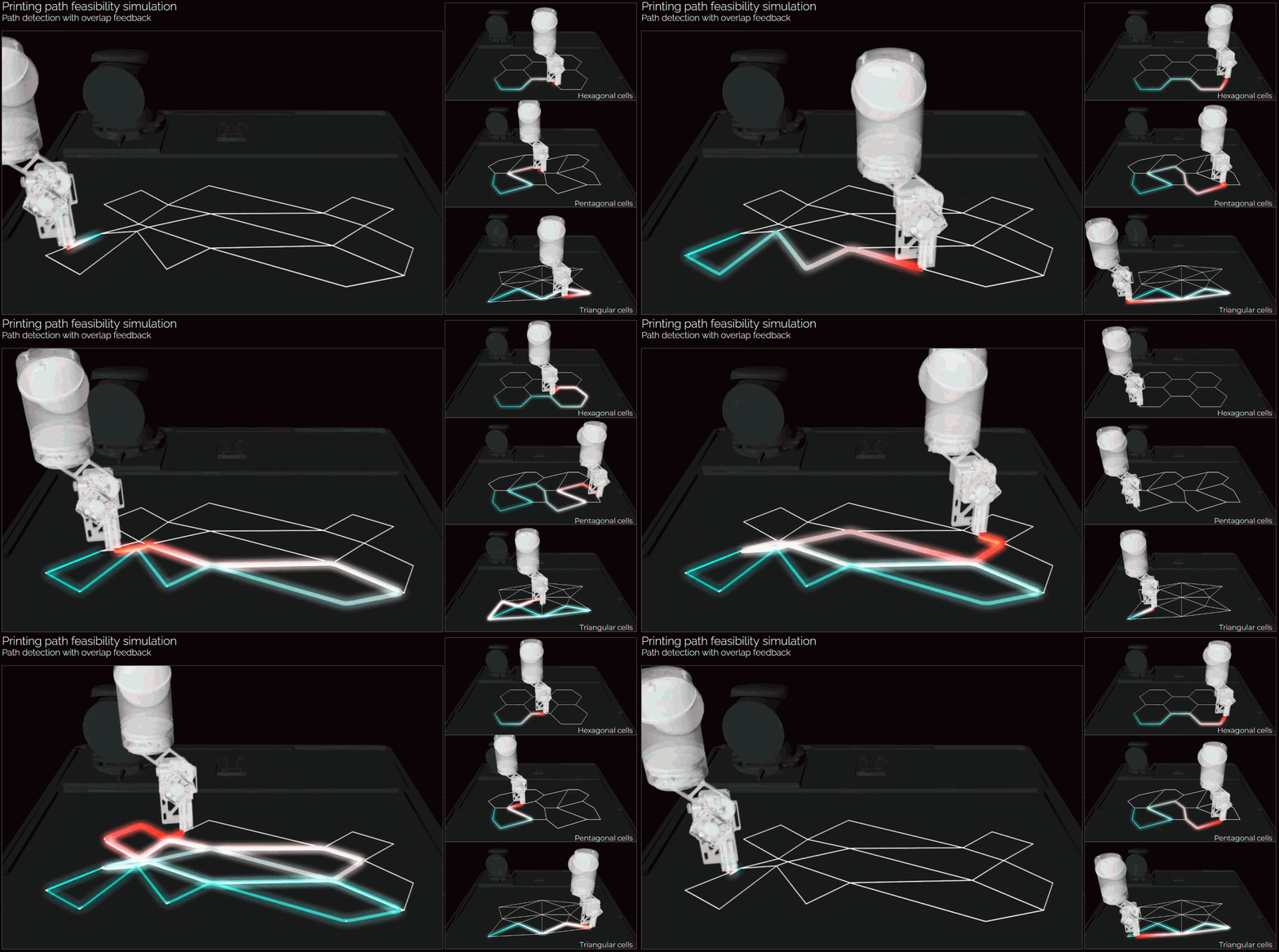
Kinematic trajectory simulation for 6-axis Universal Robots UR5 robotic arm
Cell Merging & Morphogenetic Growth
From base layer 0 to layer 200, the geometry undergoes continuous morphogenetic cell division, expansion, and shape transformation. This parametric grading transitions dense structural ribs into open acoustic chambers and angled shading louvers.
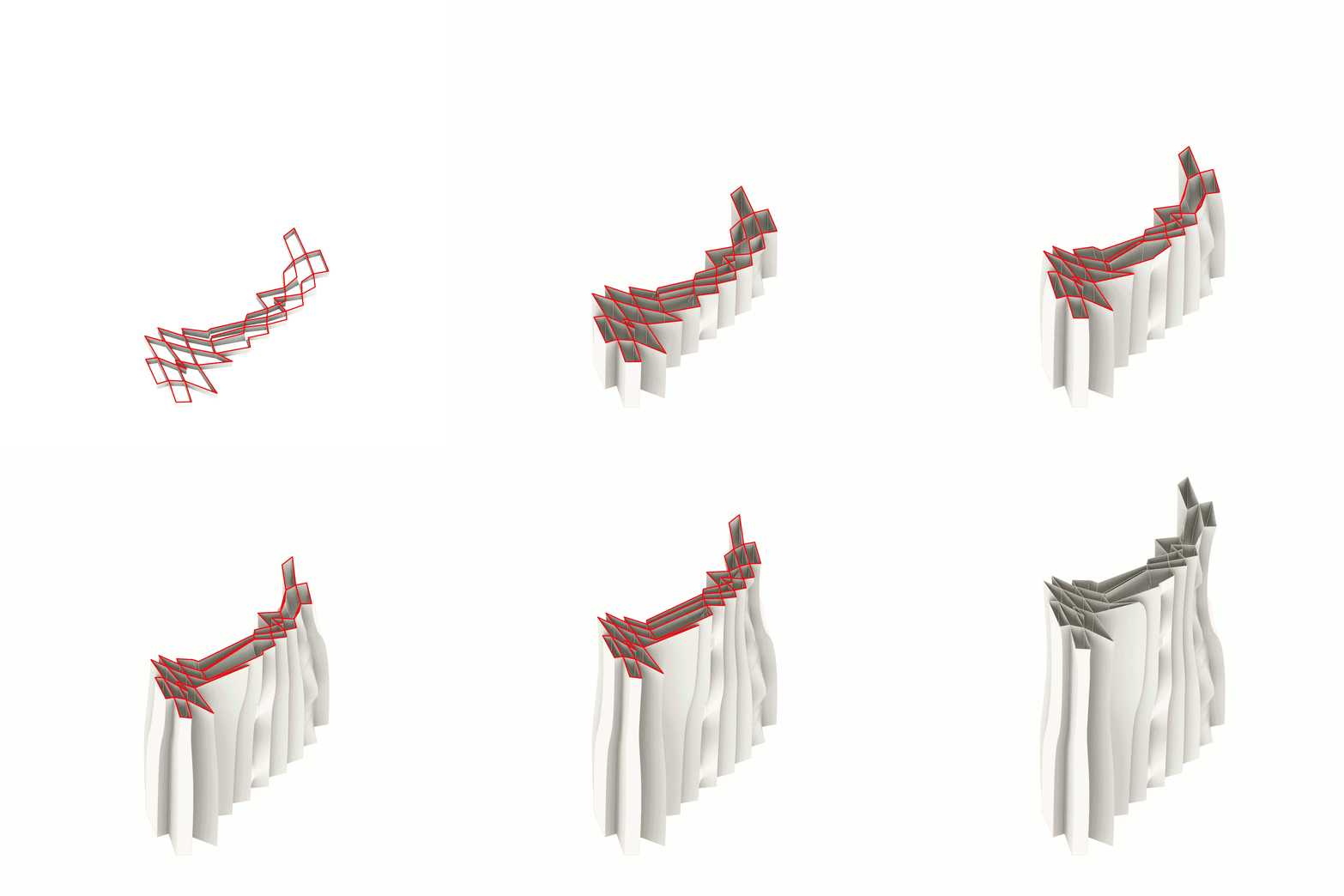
Parametric cell merging progression transitioning structural cores into porous shading louvers
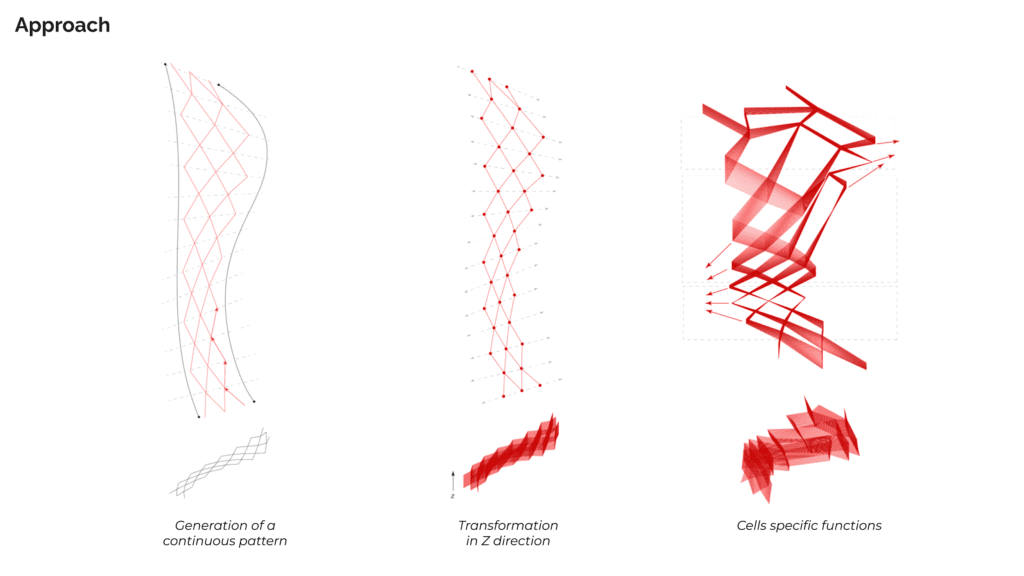
Systematic transformation sequence and cellular division
Assembly Mechanism, Concrete Infill & Post-Tensioning
The modular facade units connect via an integrated post-tensioning assembly mechanism. Vertical hollow channels accept 3 mm post-tensioning rods and micro-concrete grout infill, forming hybrid polymer-concrete composite columns capable of carrying multi-story gravity and wind loads.
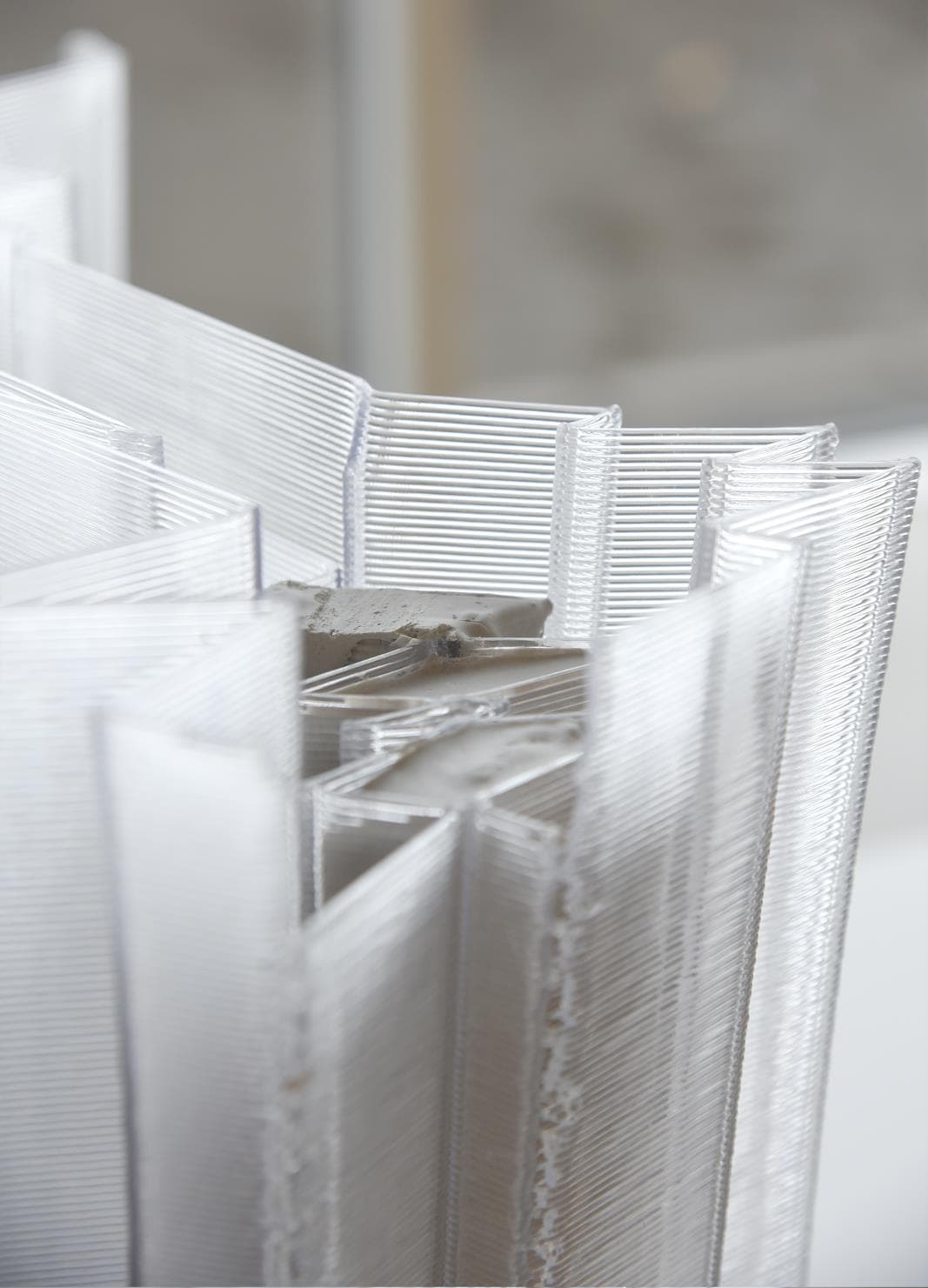
Exploded structural axonometric detailing post-tensioned tie rods and concrete infill channels
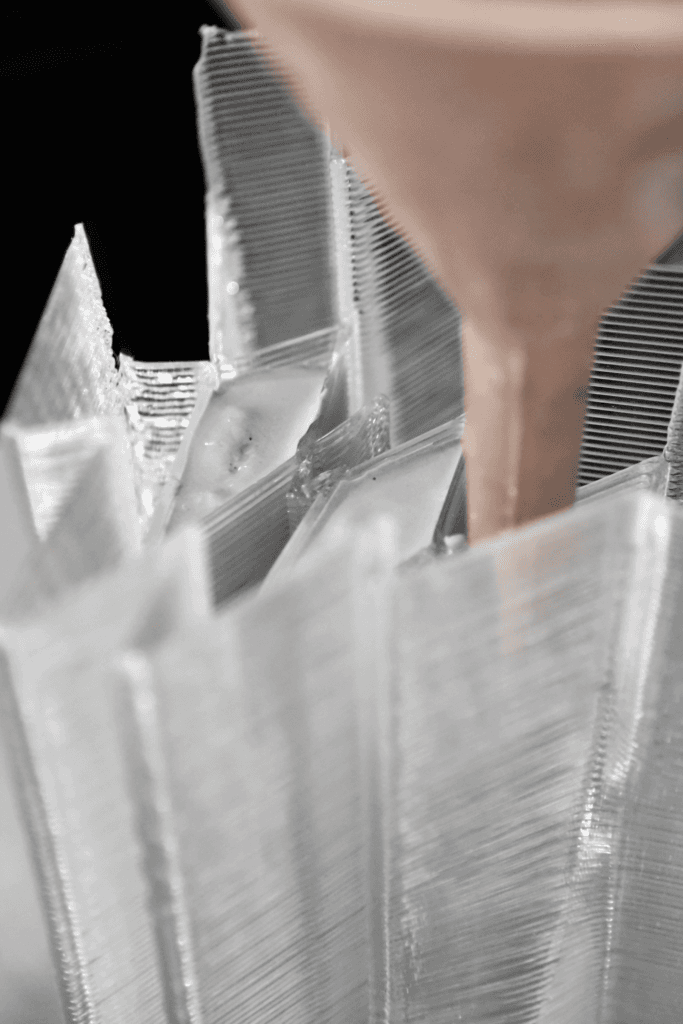
Pouring high-performance concrete grout into 3D printed permanent formwork channels
Structural System Overview & Fabricated Demonstrator
Comprehensive structural assembly documentation and full-scale fabricated prototype module ready for modular building envelope installation.
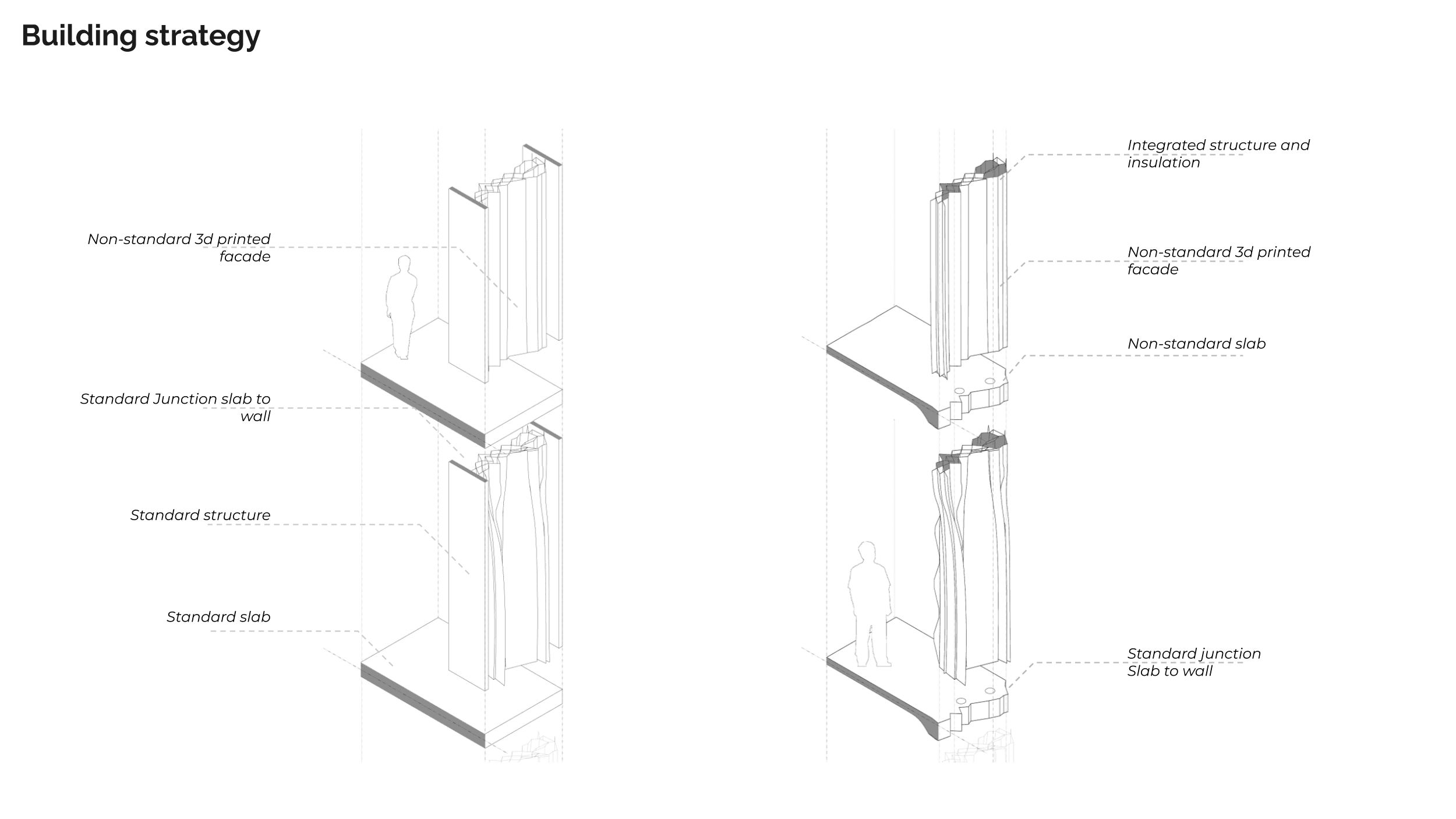
Comprehensive structural assembly documentation and joint mechanism
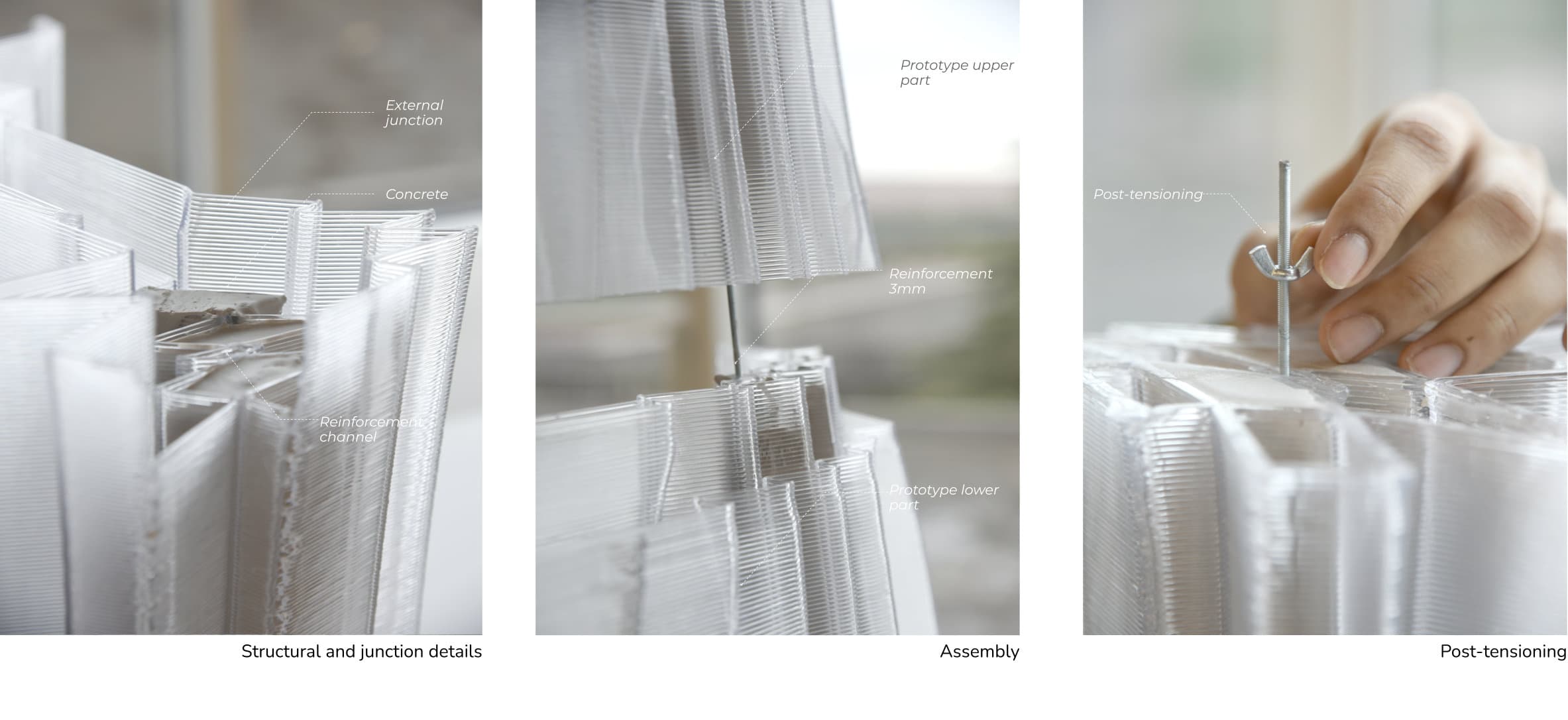
Fabricated joint assembly ready for modular building envelope installation
Patented Prototype Module & Architectural Projection
The completed facade module was patented and showcased at ETH Zurich as a viable blueprint for zero-waste, high-performance circular construction. Its modular interlocking system allows complete end-of-life disassembly and polymer recycling.
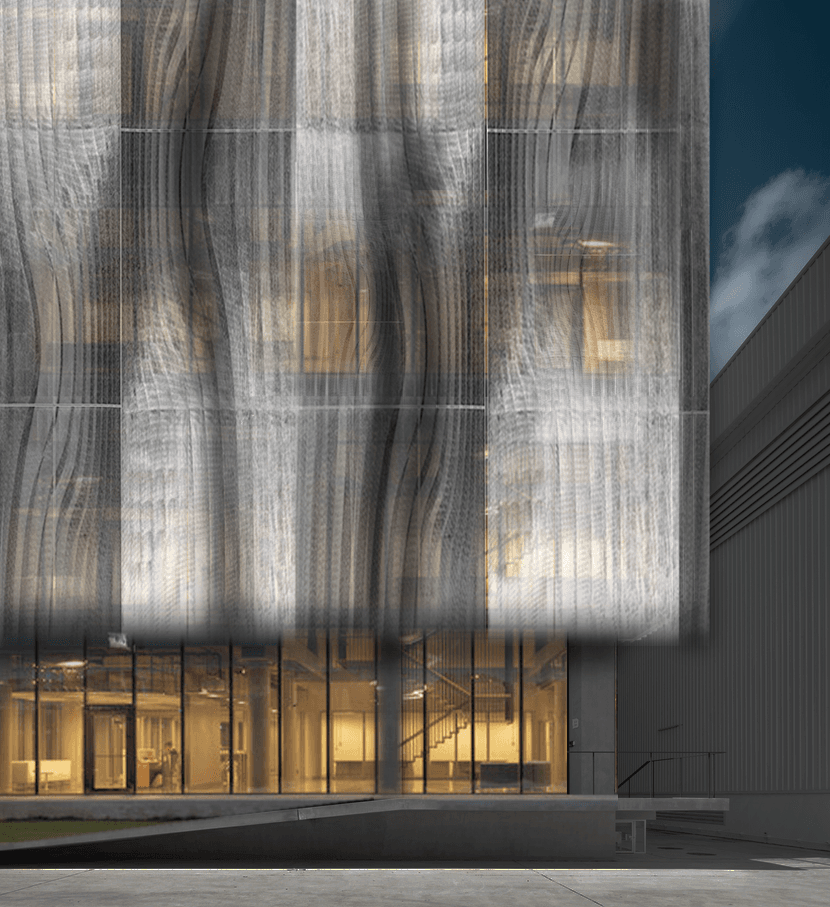
Architectural rendering illustrating large-scale building facade integration
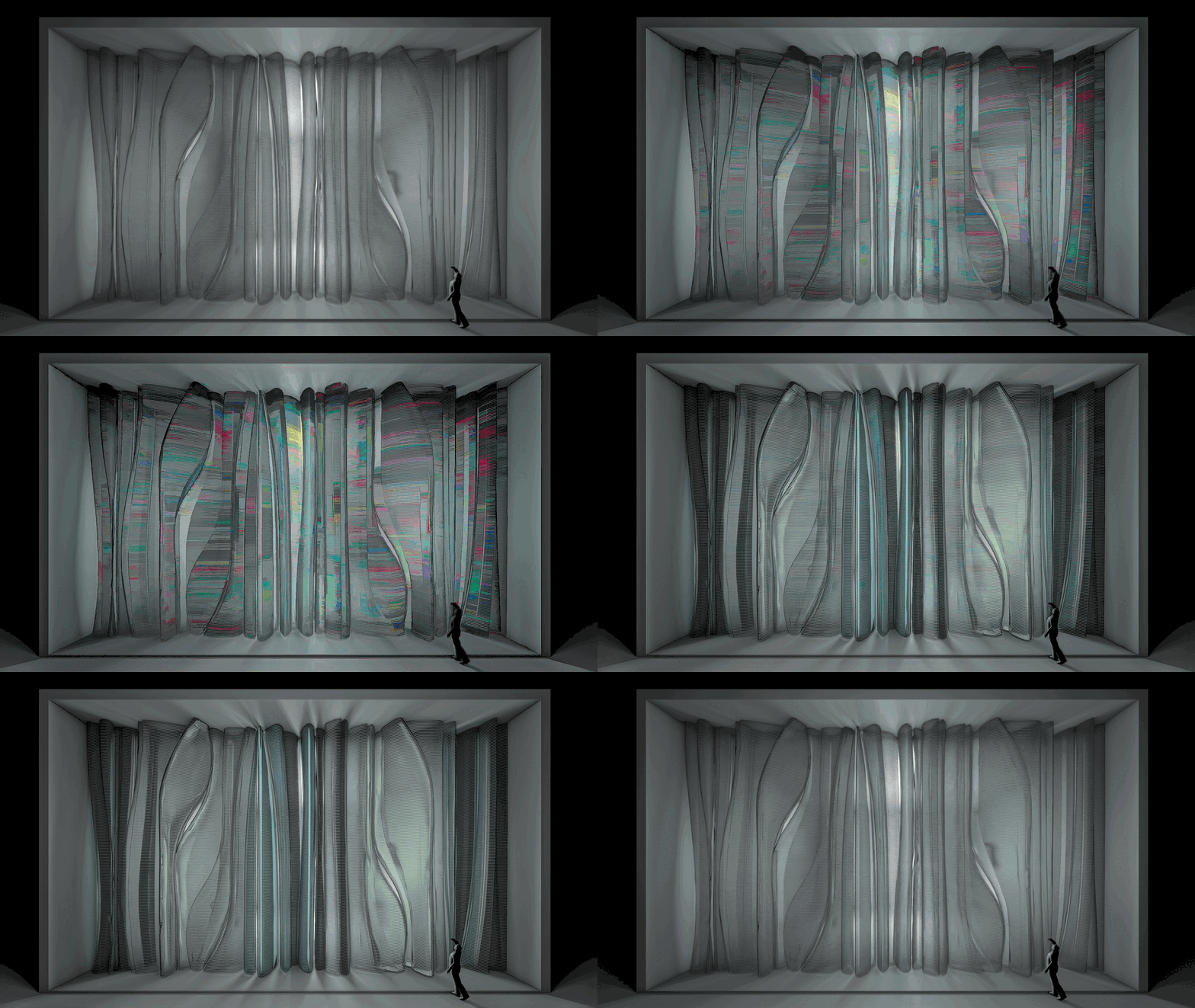
Building facade simulation demonstrating environmental daylight adaptation
Physical Demonstrator Exhibition at ETH Zurich
Full-scale physical demonstrator exhibiting multi-functional cellular depth, integrated post-tensioning channels, and precision interlocking joints.
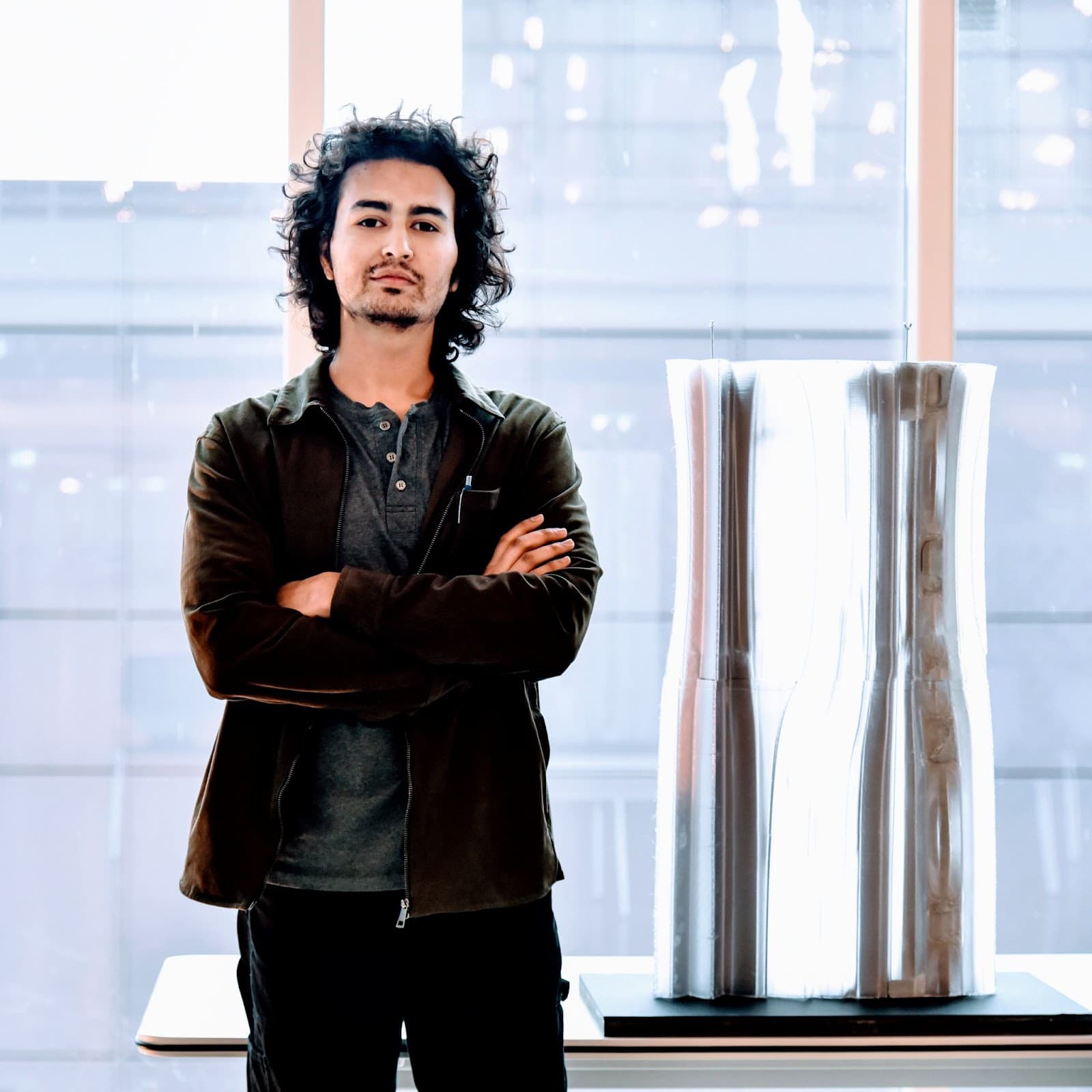
Full-scale physical demonstrator on public exhibition at ETH Zurich