Norwegian Printing Museum
Stavanger: Scenography & Graphic Heritage • Stavanger, Norway
@Atelier Brueckner
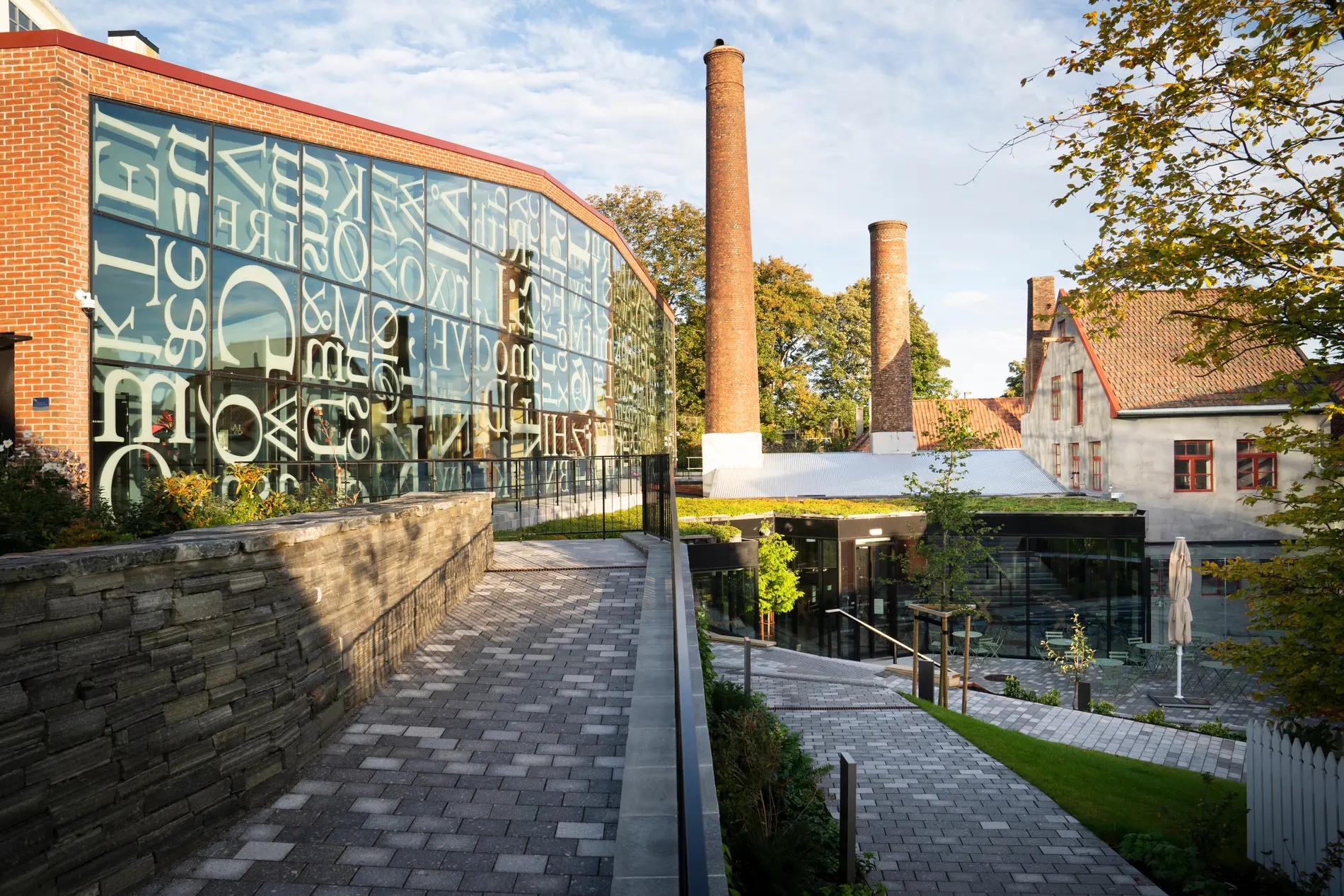
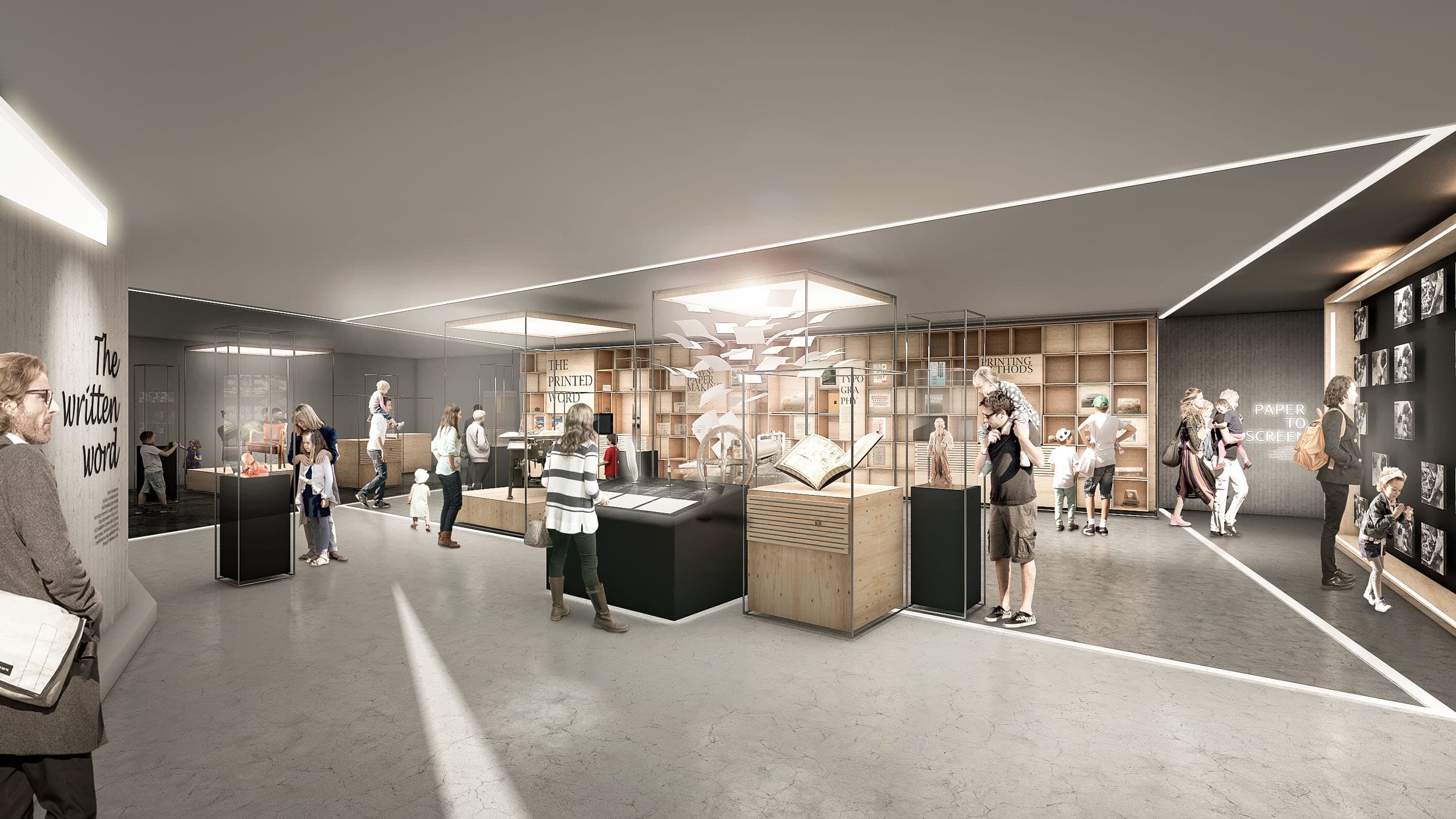
The Norwegian Printing Museum (Norsk Grafisk Museum) in Stavanger offers a comprehensive, immersive journey through the evolution of the written and printed word—from early moveable type and image reproduction techniques to modern digital communication and democratic discourse.
Developed with Atelier Brueckner, the exhibition scenography is co-located with the Norwegian Canning Museum in Old Stavanger. In the late 19th and 20th centuries, the city's globally exporting fish canning industry spurred a massive boom in lithography, decorative tin printing, and commercial label design ("Iddisar").
The spatial choreography is structured around a two-sided chronological visitor parkour across two levels. On the ground floor, monumental spatial vitrines showcase historical presses, typographic evolution, and the democratic impact of print media. On the upper level, an authentic working print atelier allows visitors to experience historic letterpresses, Linotype machines, and lithographic stones in active operation.
Architecture & Typographic Envelope
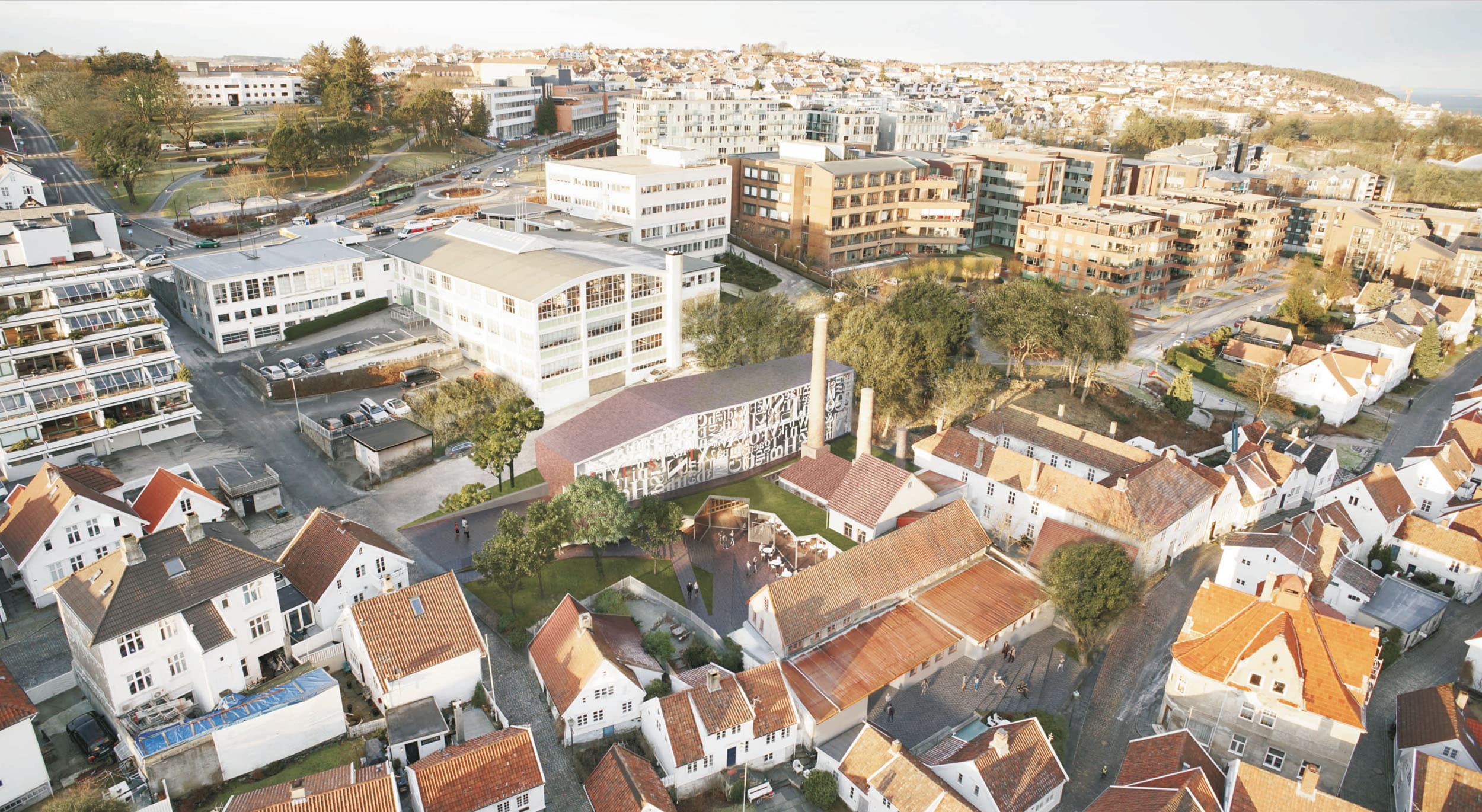
Co-located with the former canning factory in historic Stavanger, the museum architecture bridges industrial heritage with contemporary scenography. The building envelope features a bold typographic glass curtain wall that reflects the museum’s core mission into the surrounding urban courtyard.
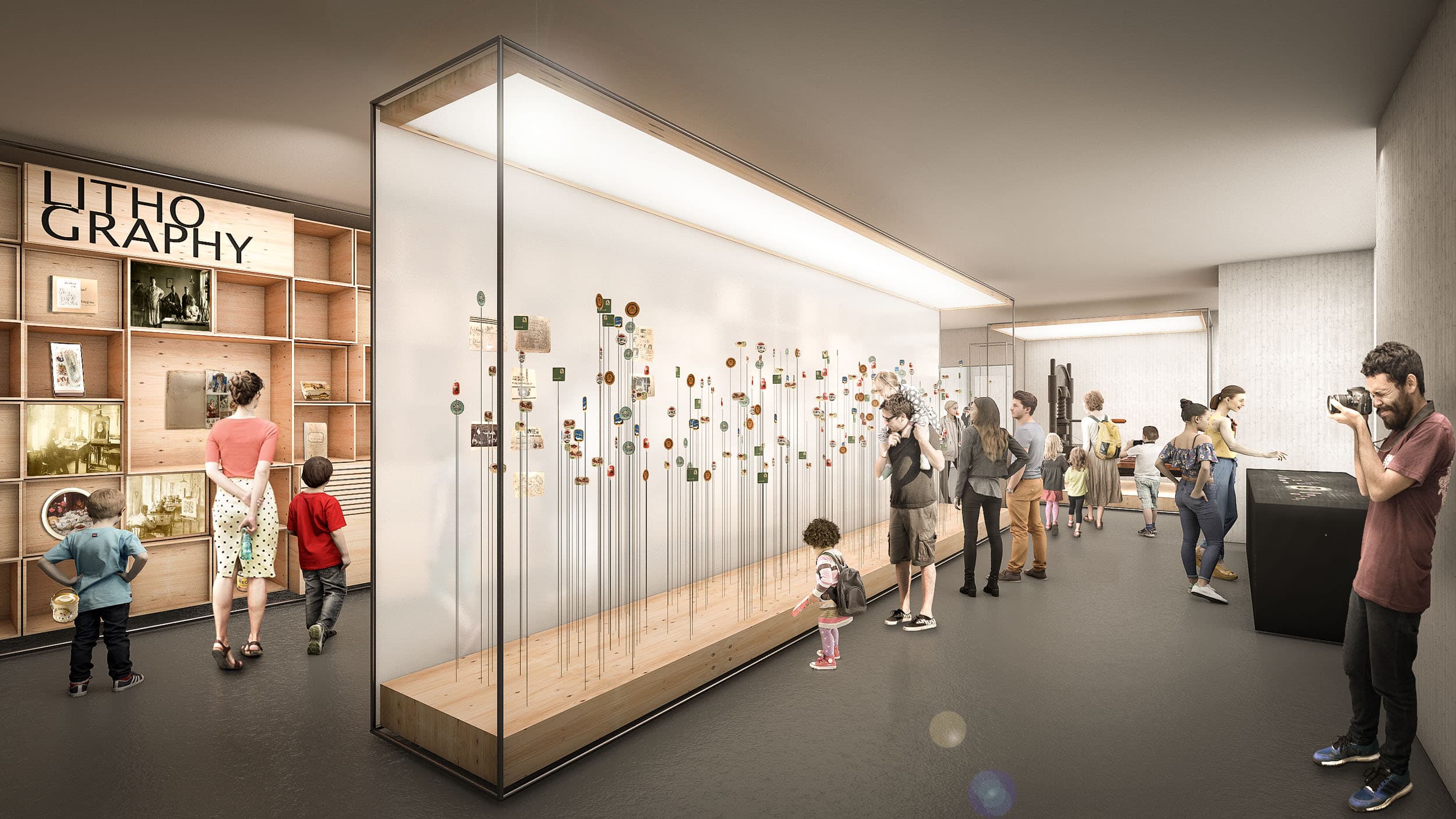
Spatial visualization showing the rhythm of exhibition vitrines along the visitor route
Dual-Floor Spatial Choreography & Masterplanning
The curatorial parkour is organized across two complementary levels. The ground floor presents a chronological exploration from early handwriting to the industrial press and digital screen, while the upper level is dedicated to an operational industrial print atelier.
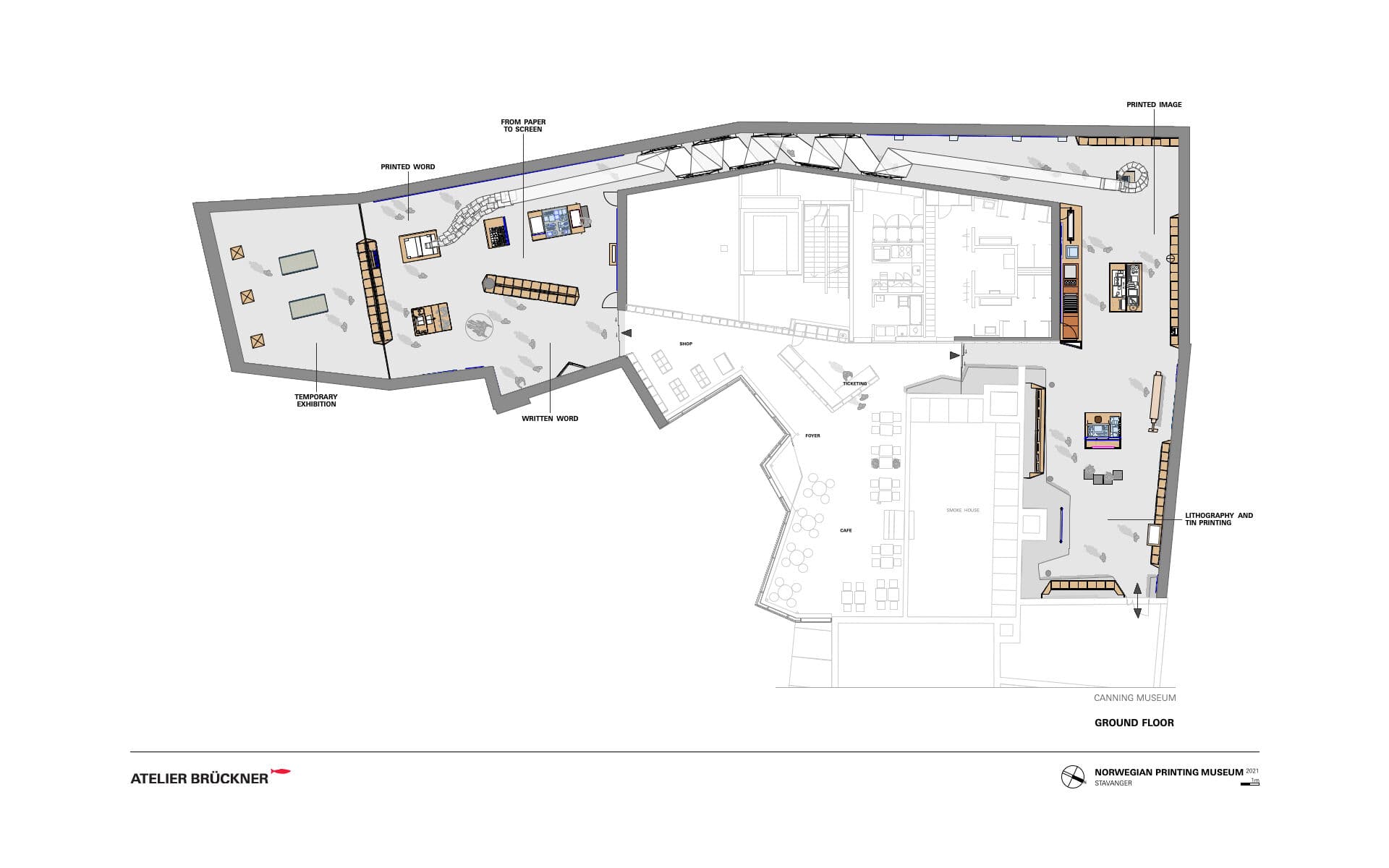
Ground Floor Plan: Chronological journey through the written word, printed word, and democratic media
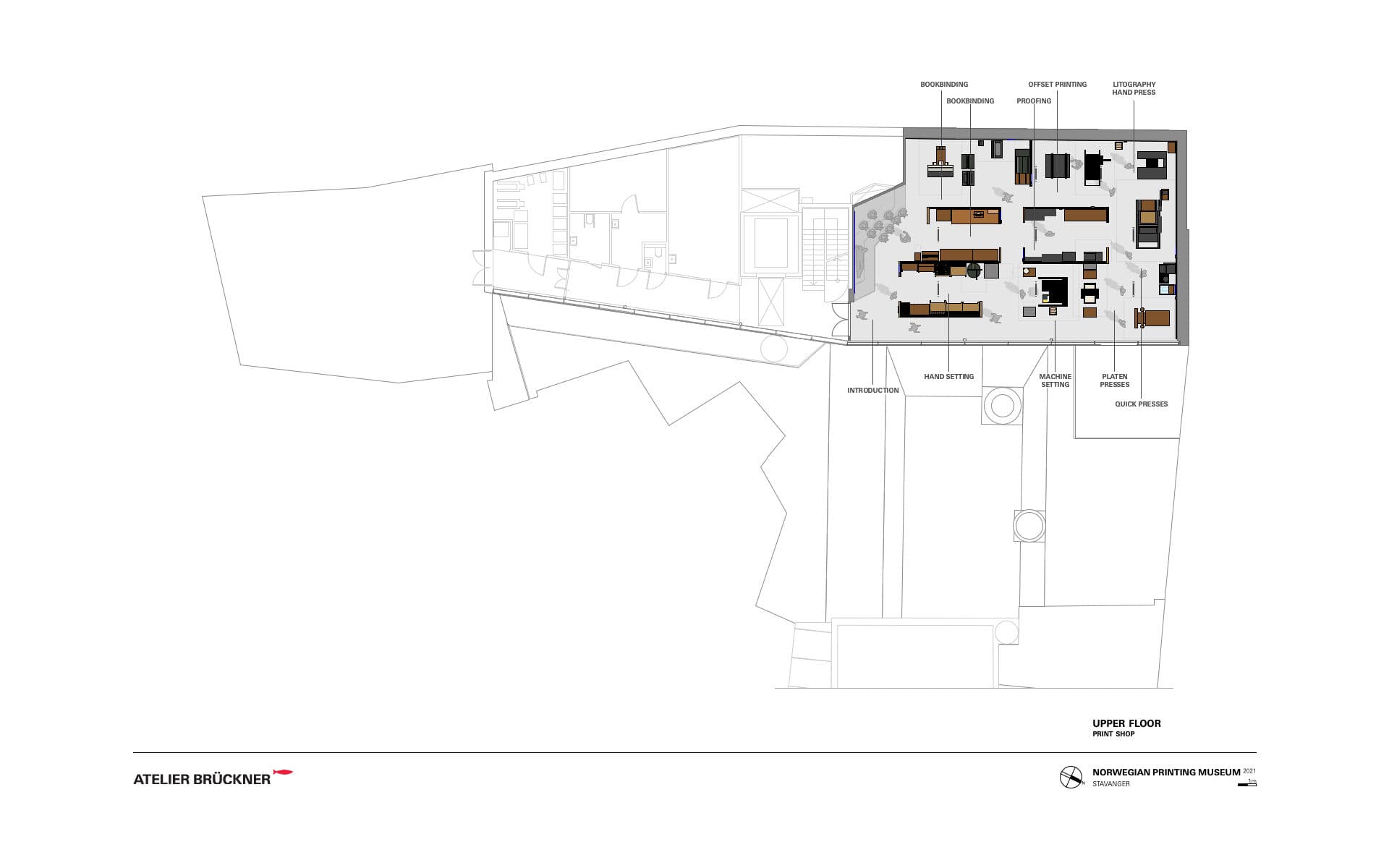
Upper Floor Plan: Living print shop with hand setting, machine setting, platen presses, and lithography
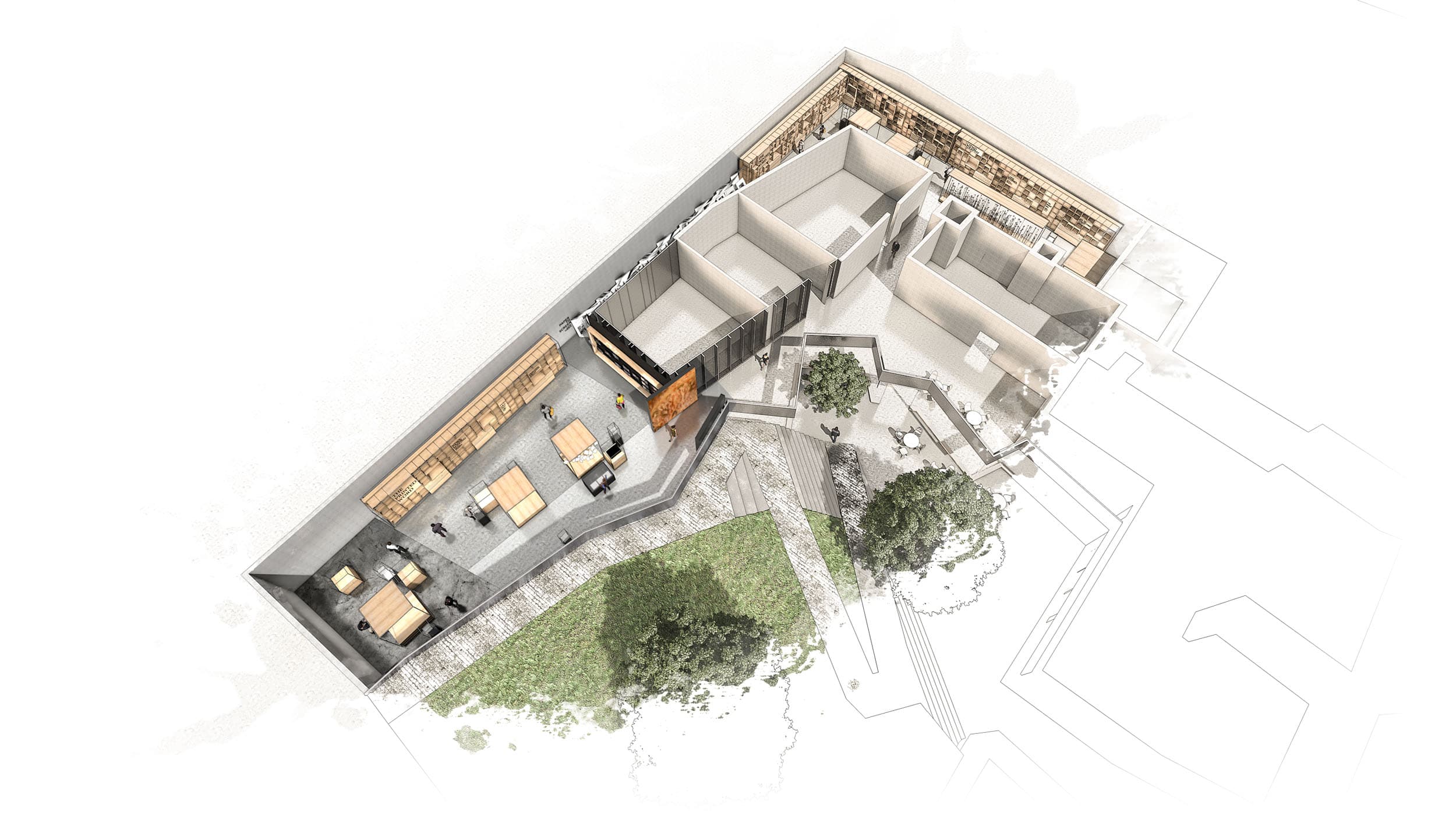
Axonometric zoning study mapping machinery placements and exhibition vitrines
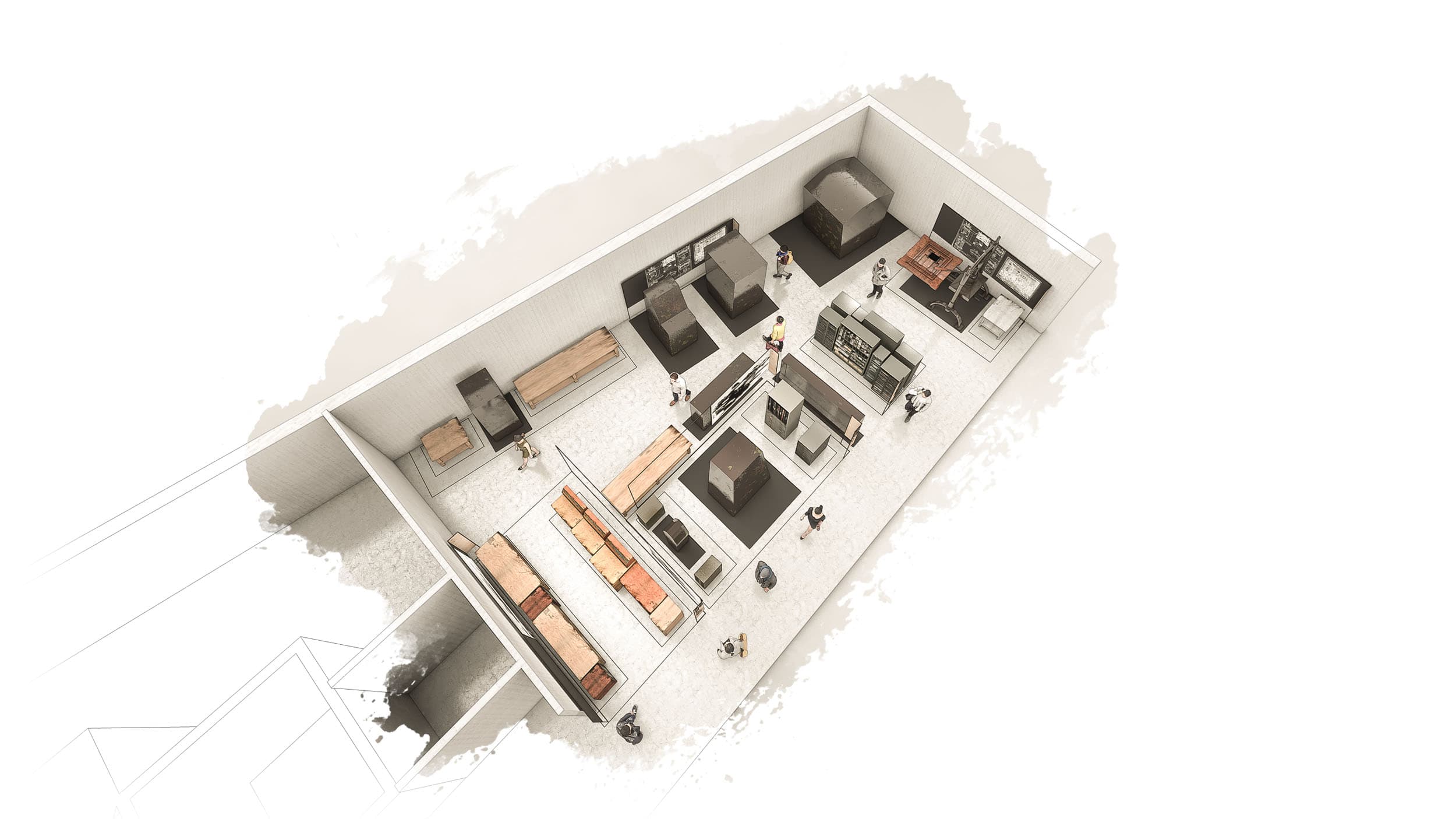
Axonometric diagram of the upper level print workshop layout
The Industrial Core & Gutenberg Scenography
At the heart of the ground-floor gallery stands an authentic wooden Gutenberg-era printing press enclosed within an open architectural frame. Above the press, a sculptural cascade of suspended printed sheets sweeps upwards into the ceiling, symbolizing the historic explosion of information and literature.
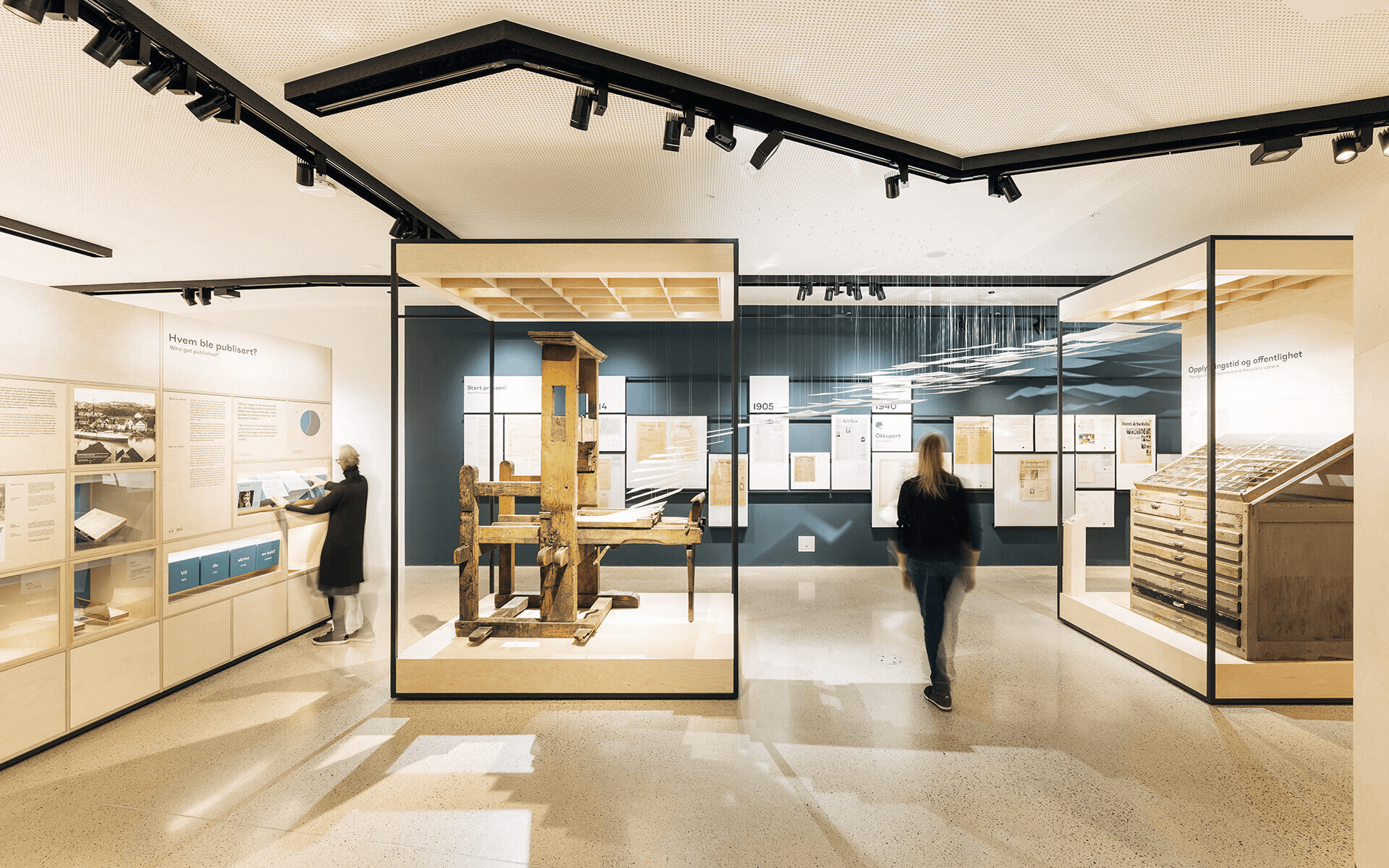
Realized gallery scenography framing the historic wooden letterpress within a light-wood cube
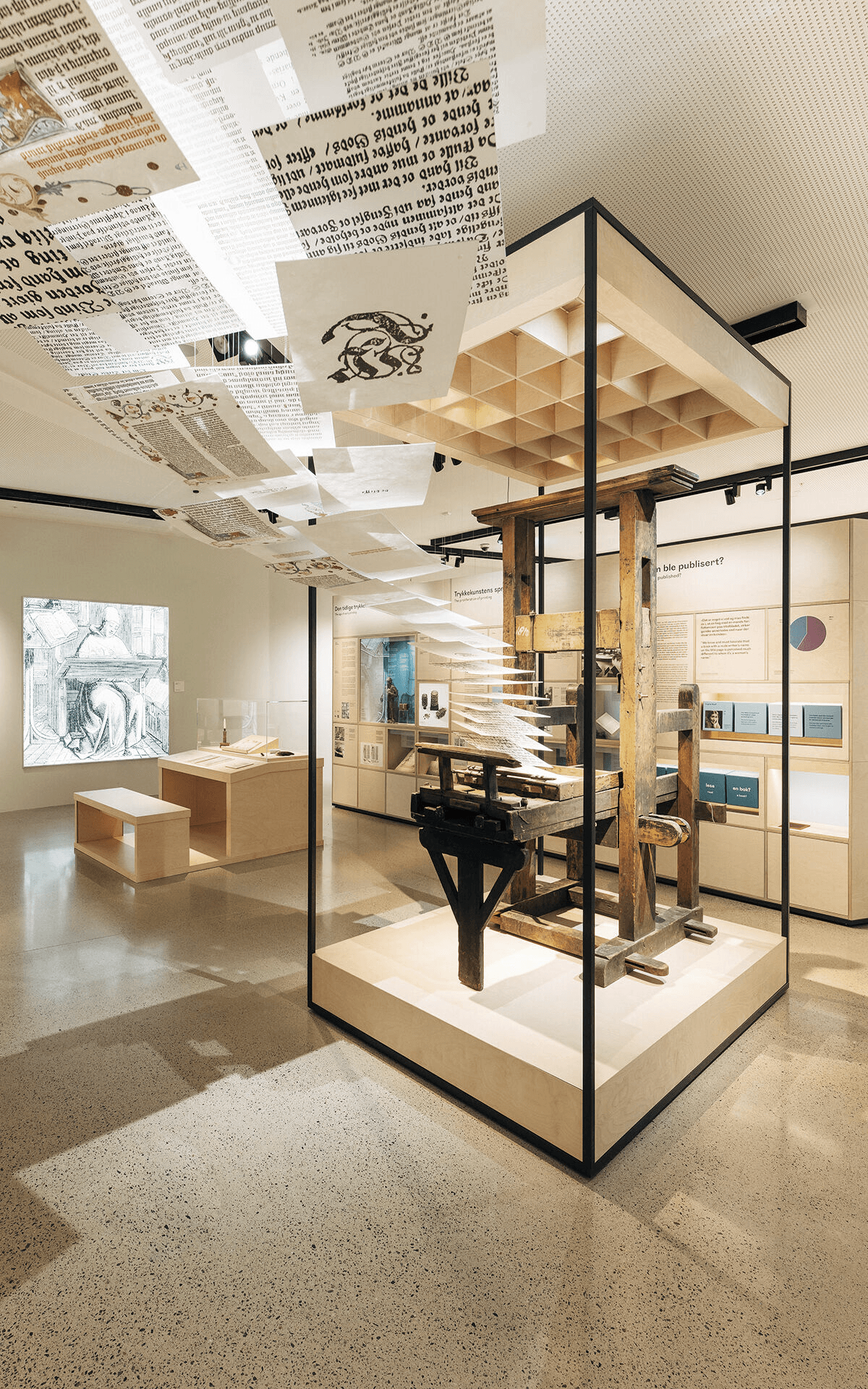
Suspended paper ribbon sculpture visualizing the diffusion of the printed word
The Democratic Word & Spatial Portals
Print played a transformative role in the democratization of knowledge and freedom of expression in Norway. An angular, folded portal forms a transition corridor prompting visitors to reflect on the modern role of free speech, digital media, and public participation.
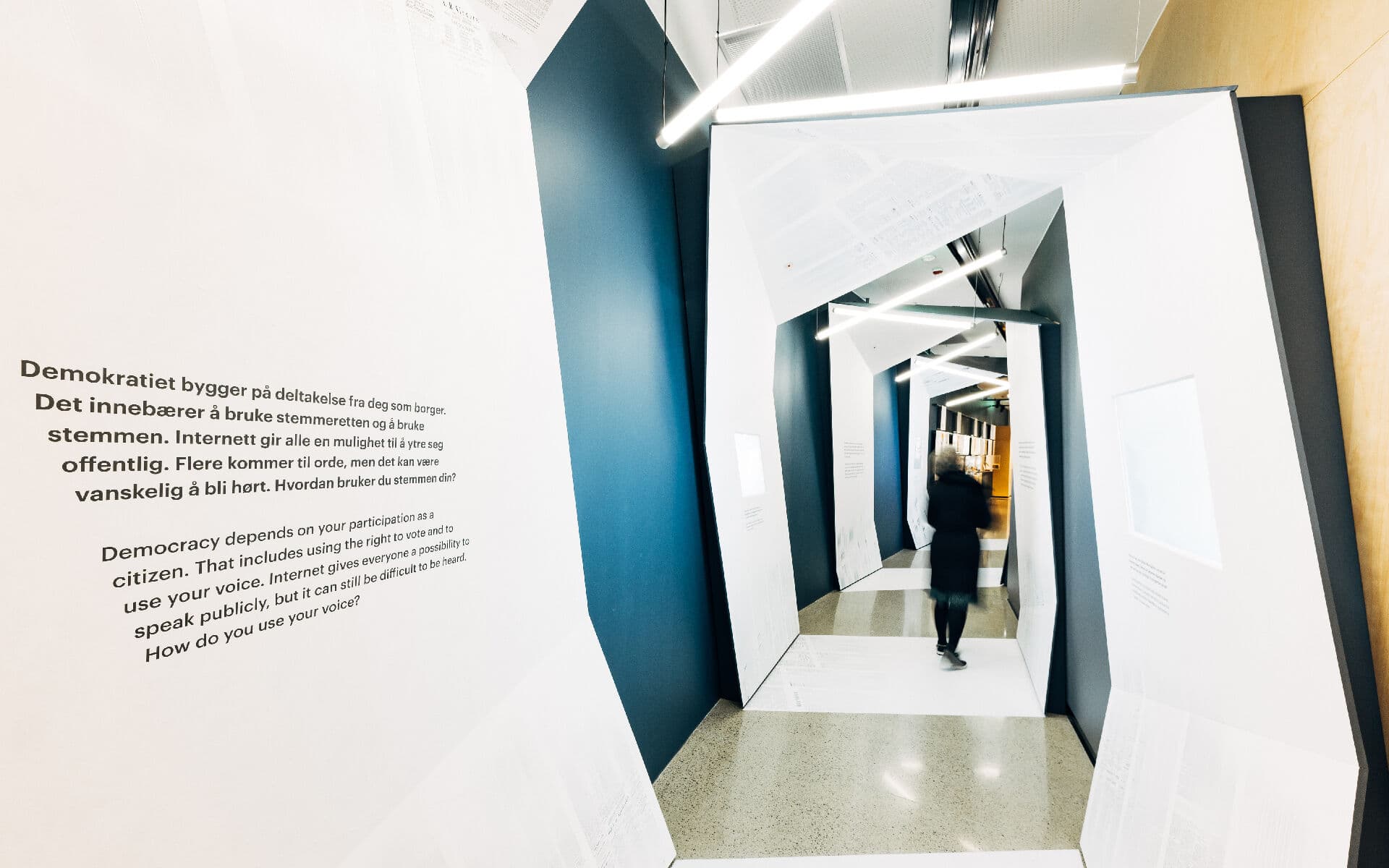
Spatial portal with bilingual typography engaging visitors on democracy and civic participation
Typographic installation study investigating graphic structure and linguistic heritage
Stavanger Canning Label Lithography Heritage
Stavanger’s graphic arts industry flourished directly because of the region’s booming fish canning trade. Thousands of distinct decorative sardine tin labels ("Iddisar") were designed and printed using multi-color lithography, positioning Stavanger as a powerhouse of commercial graphic design.
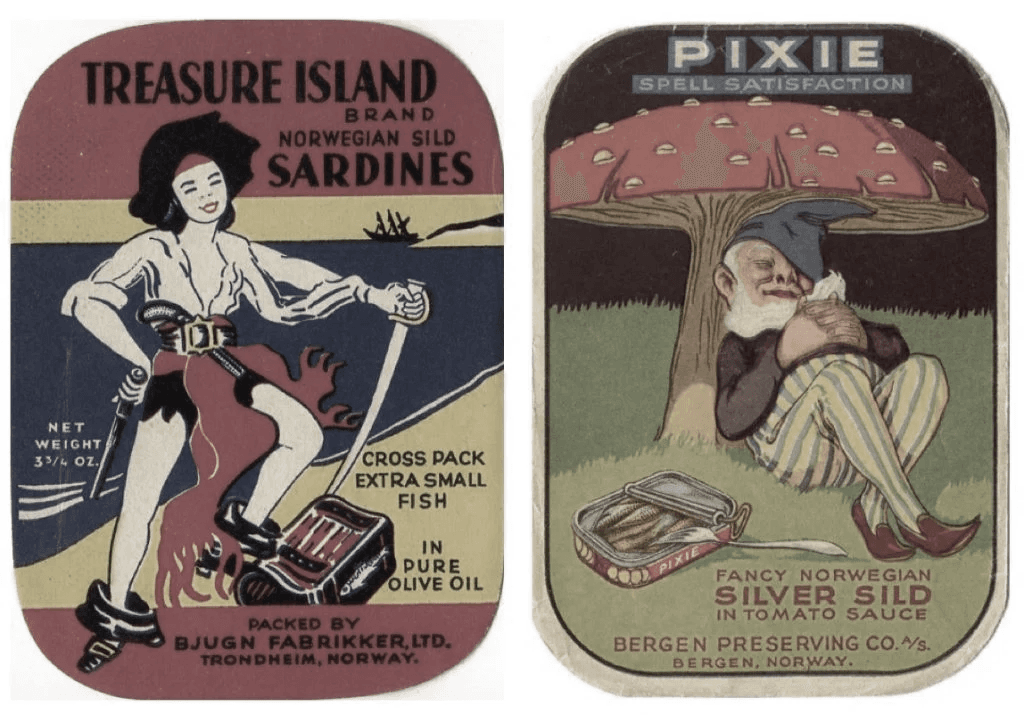
Historic lithographed canning labels: "Treasure Island Brand" and "Pixie Silver Sild"
Exhibition showcase presenting original lithographic printing stones and vintage packaging artwork
Living Print Atelier & Hand-Composition Workshop
Unlike conventional static museums, the upper floor operates as a live production facility maintained by retired master printers. Visitors can handle composing sticks, assemble movable lead type from wooden type cases, and produce their own prints on historic proof presses.
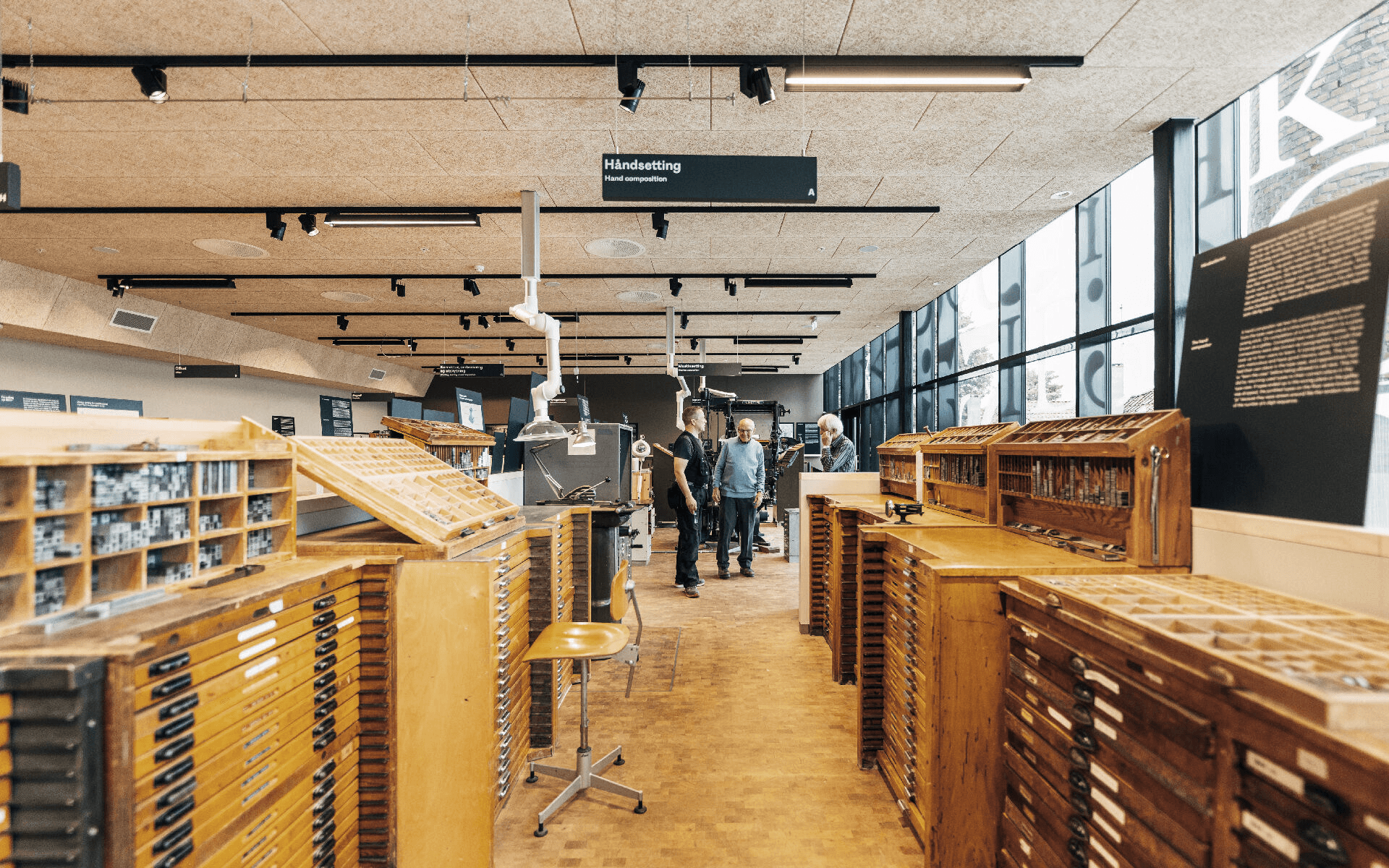
Active workshop floor with authentic wooden letter cases and composing stations (Håndsetting)
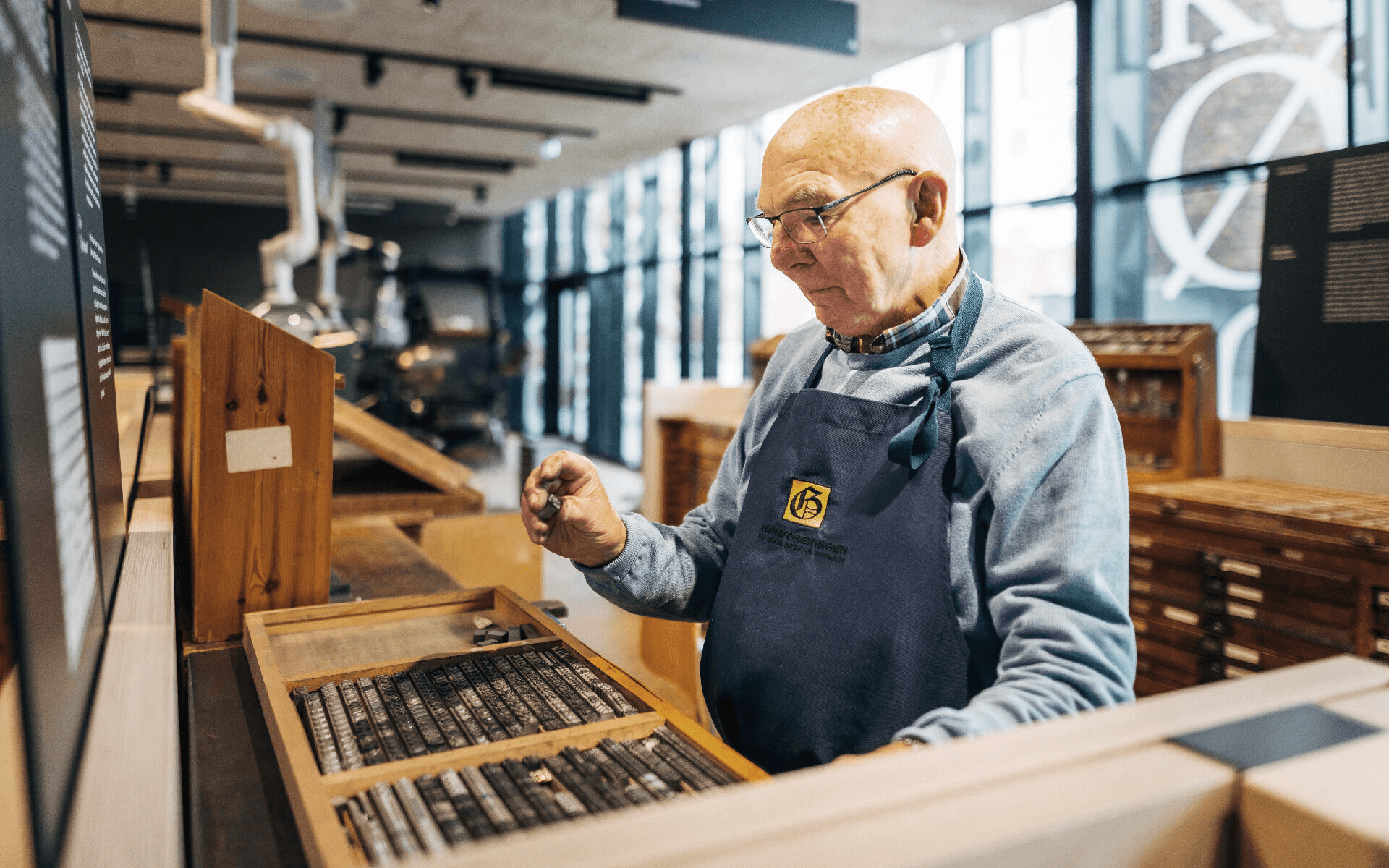
Master printer assembling individual lead characters in the workshop
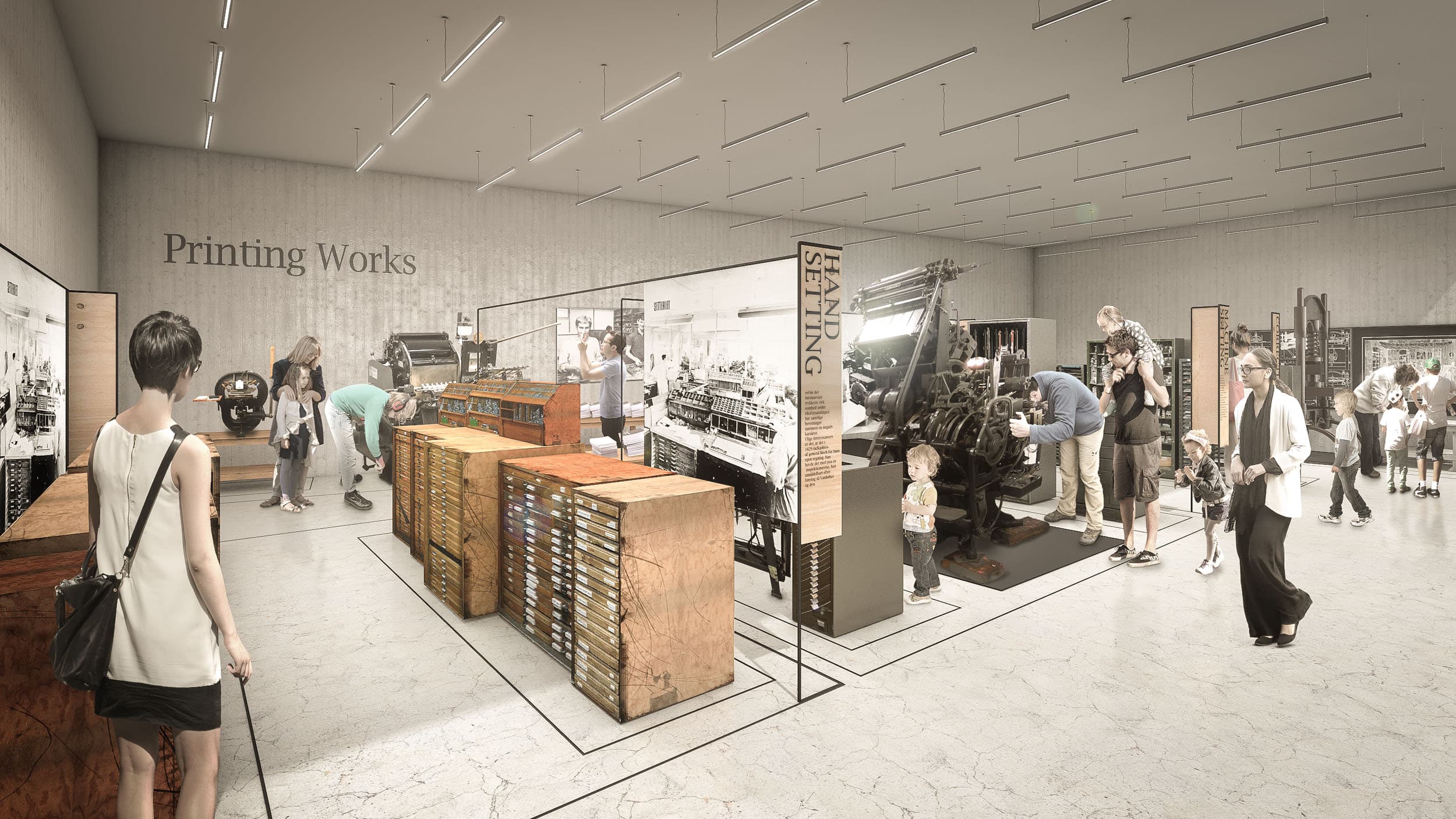
Perspective study for workshop layout integrating original mechanical presses with interactive stations